
Who doesn’t love a good curse? Let’s explore three more creepy curses you might not have heard of.
Pele’s Curse

The beautiful Hawaiian Islands and their creation are intrinsically linked to the Goddess Pele, who’s ire is said to directed to anyone who takes any piece of native natural item away from Hawaii.
Bad luck is said to befall those who take sand, rocks, shells or pumice away from the islands, and it’s such a problem that park ranger’s are said to have hundreds of previously abducted rocks returned by mail with letters begging Madam Pele for forgiveness.
The origin of this curse is said to be fairly modern, and probably a result of park rangers being sick to death of tourists taking rocks and stones from the islands, but is now considered a part of Hawaiian folklore.
It’s also illegal to remove minerals from a U.S national park, but more importantly, collecting souvenir rocks is seen by many as disrespectful to Pele and the her beautiful islands, so just buy a keyring instead.
Macbeth – The Scottish Play
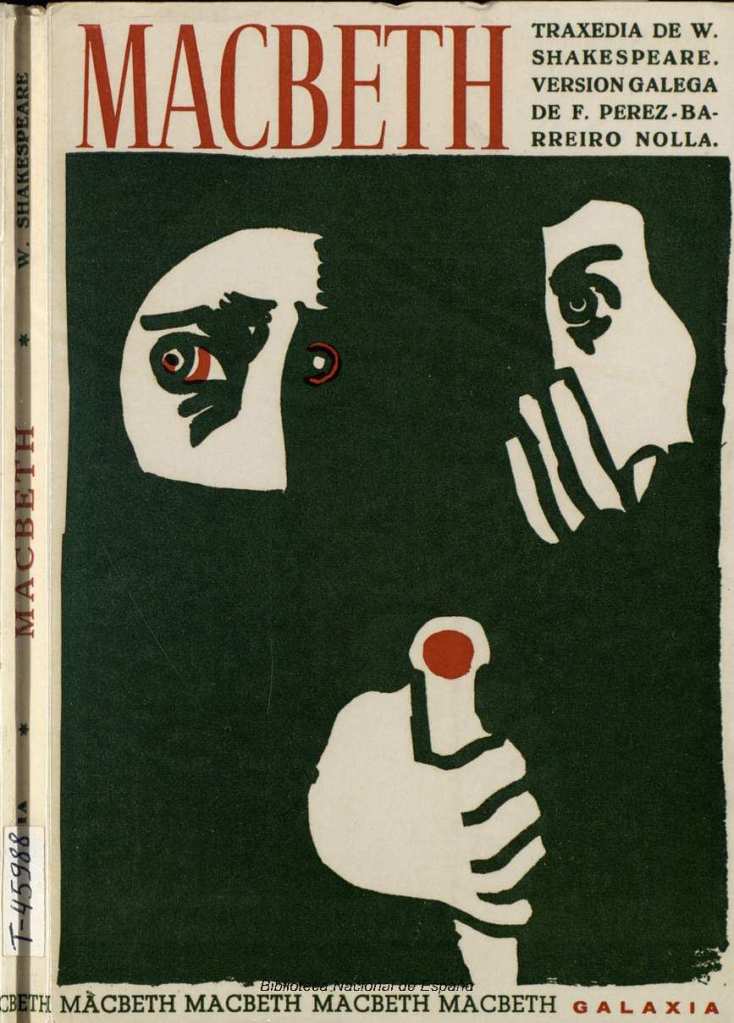
Even if you haven’t seen or read they play itself, William Shakespeare’s Macbeth, is at least known in passing. First preformed in the early 1600s, the play revolves around the titular character who is told by a coven of witch’s that he will be King of Scotland. At his wife’s encouragement, he kills the current King and takes his place. Of course, being one of Shakespeare’s tragedies, this doesn’t go very well, and Macbeth kills a few more people, triggers a civil war, which kills even more people and is overthrown and decapitated.
Even outside of theatrical circles, the play is known as one of the stage’s more prominent superstitions – that saying the play’s name, Macbeth, in a theatrewill bring misfortune to the production.
There are exceptions to this rule – such as when the character is referred to in the script, but aside from this, the use of the M word is a big no-no.
The supposed origin of this curse is that, due to its popularity and ability to draw a crowd, the play was often staged by theatres in financial trouble, who went out of business shortly after, sometimes due to the high production cost.
The far better origin theory however, is that the play was cursed by a coven of real life witches, who were offended by Shakespeare’s use of a real spell.
If one does utter the name, they must perform a cleansing ritual which involves turning around three times, spitting over your left shoulder and reciting a line from another Shakespeare play, or swearing.
A handful of real life mishaps have supposedly resulted from the curse, including a handful of cast injuries, the burning down of the D Maria II National Theatre in Lisbon, Portugal, and the death of Harold Norman, an actor who was mortally wounded in a sword fight during the performance. He died three weeks later.
The Chained Oak of Alton Towers

Near the village of Alton, Staffordshire, England, sits an ancient oak tree in a peculiar predicament. It’s branches, you see, are chained together.
Far from being the result of some woodland kink, the story is one of local legend.
So it is said, the Earl of Shrewsbury was heading hone to Alton Towers – then a magnificent stately home, rather than an internationally renowned theme park. This autumn night the Earl’s coach came across an old bigger woman, who asked the Earl to spare a coin.
The Earl refused and sent the bigger woman on her way, but not before the woman uttered a curse – Every fallen branch of the old oak tree would herald the death of a member of the Earl’s family.
Of course, the Earl paid the woman no mind and continued on his way, however, that very night, a storm came though and broke one of the branches from the oak tree and – wouldn’t you know it – a member of the family died suddenly and mysteriously the very same night.
Now believing the validity of the curse, the Earl commanded the tree to be chained from branch to branch to prevent another branch from falling, and it’s been that way ever since.
How much of the story is true has been lost to time, and many believe the oak was simply chained to help preserve it. Similarly, their seems to be no single mysterious death in the Earl’s family around the time of the story – though to be around the 1840s – however, the Earl’s youngest daughter died of Scarlet fever is Rome that same year, followed by her three children who passed away from measles shortly after.
Could this be the curse’s manifestation? In the years since, branches have inevitably fallen and a portion of the tree has collapsed completely, but no mysterious deaths in the family have been associated with it.
Today, the oak and it’s chains remain, and the story has been immortalised (and embellished) in the ride, Hex- The Legend of the Towers, at the Alton Tower’s theme park, and I can say from experience that it’s pretty good fun.
Don’t forget to subscribe and follow our social channels below!

 The Hawthorn Files
One Comment Add yours