
Here in Wales, we have a long tradition of folk and fairy creatures featuring a whole cast of characters. Some are local variations of critters seen across the Celtic lands, but some are weird enough stand out one their own.
Let’s explore some weird Welsh cryptids and folk creatures.
Aderyn y corph – The Corpse Bird

Birds, particularly corvids, are seen as an ill-omen across a wide range of folk-practices, mostly due to their scavenging nature, but here inn Wales we have a particularly bizarre bird known as the Aderyn y corph.
To find this little bird perching outside a persons dwelling is said to be an omen of their imminent death.
Unlike other birds, the Corpse Bird is said to have no feathers – making it an ugly kind of thing – and its cry is said to sound like the Welsh word, dewch which translates to “come” in English. Some say that instead of chirping, the bird taps on the window instead.
When not creeping around sick people’s houses, the bird is thought to live in the Welsh otherworld, Annwn.
Naysayers believe the aderyn y corph is a misidentified screech owl – to which it is sometimes translated. This translation was first seen in early Welsh translations of the bible.
Twrch Trwyth – The Monster Boar
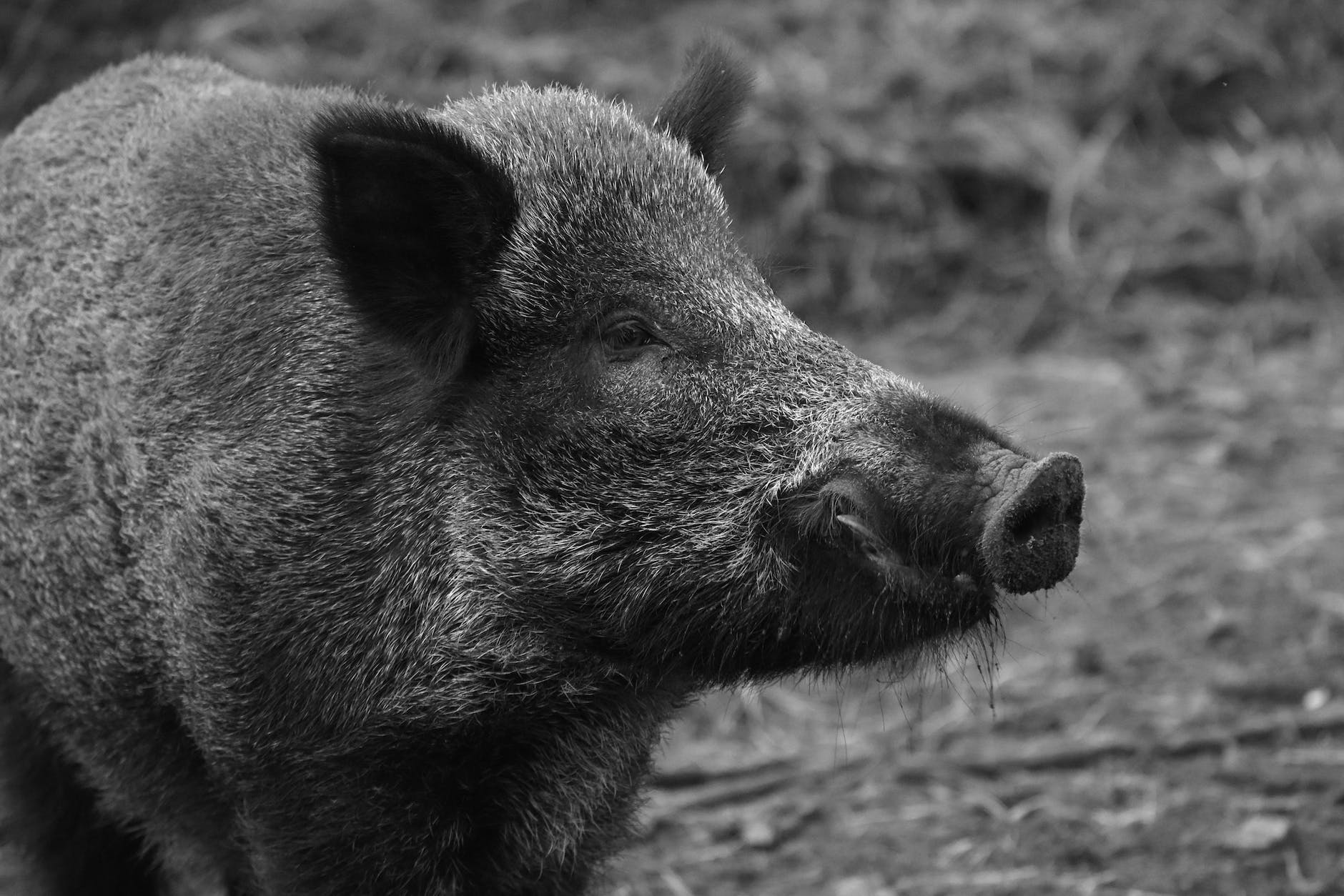
This mythical boar was once the human son of Prince Tared, cursed to take the shape of a monstrous wild boar with poisoned bristles.
King Arthur and his cousin, Culhwch, are tasked with retrieving a comb, scissors and razor that the boar carried on its head. The reason why is a whole other Arthurian legend.
Although they run the beast through all of Wales, they are unable to kill it, but eventually retrieve the items on its head and drive it into the sea, off the coast of Cornwall.
Y Ddraig Goch – The Red Dragon

The Red Dragon is imbedded in Welsh culture and has represented Wales as a heraldic symbol since 655AD.
One of its most famous appearances is in the Mabinogion – the earliest example of Welsh prose – and it’s story Lludd and Llefelys.
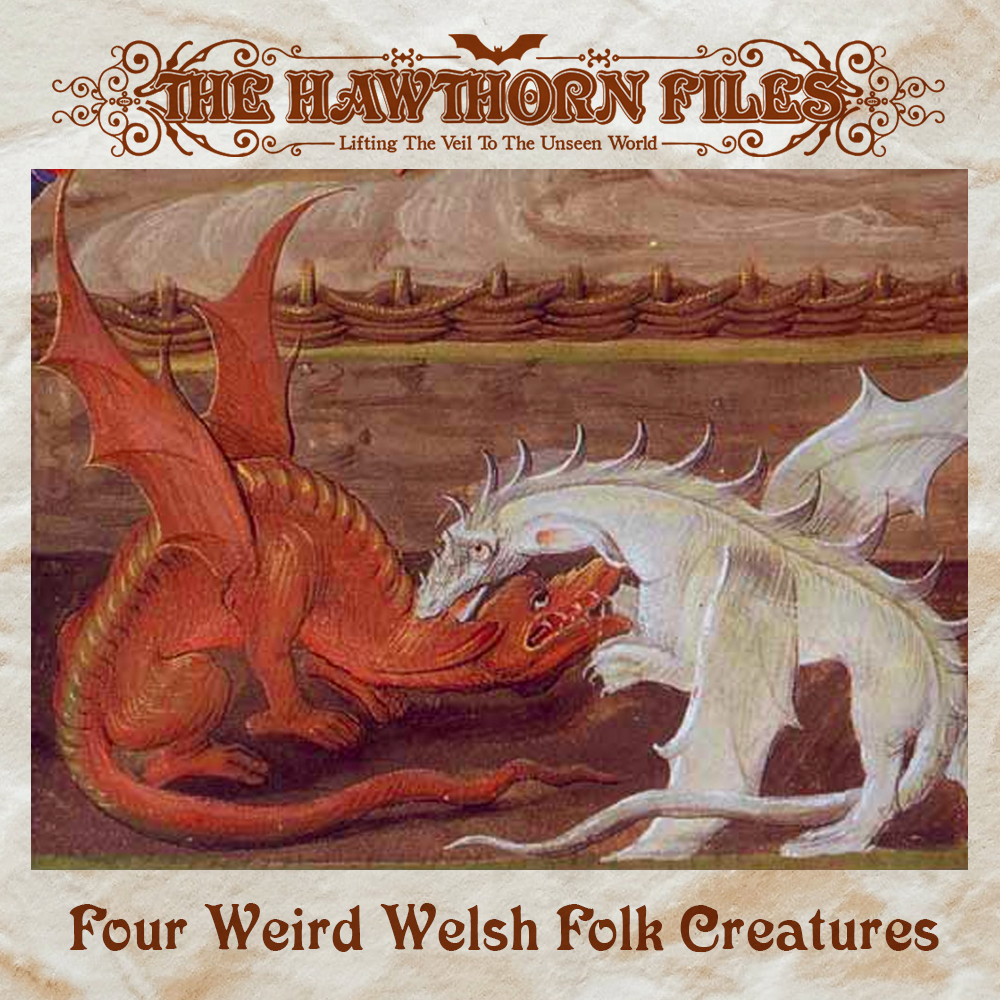
Here, The Red Dragon is locked in constant battle with the White Dragon (representing Wales and England, respectively). Welsh hero brothers, Lludd and Llefelys, is tasked with containing them, and did so with a cauldron of mead, which lulled them to sleep.
The dragons were then taken to Dinas Emrys, in North Wales, and buried, where they were said to remain asleep until King Vortigern decided to build his castle one above them. This caused the dragons to wake and continue fighting. In time, the White Dragon fled and the Red Dragon returned to its cave in the earth, where it remains sleeping to this day.
Coblynau – Tommyknockers

Much like their Cornish cousins, the Knockers, these gnome-like creatures are thought to haunt mines, assisting human miners in finding the precious stones and minerals.
Although these little goblins are said to be grotesquely ugly, they are known to be quite friendly and sometimes knock to warn of collapses.
Welsh and Cornish immigrants brought the Coblynau to America, where they became better known as Tommyknockers.
Even as recently as the 1950s, when a large American mine closed, belief in the Tommyknockers encouraged a petition to be arranged, calling on the owners to formally release the critters, so they could move on and keep other mines safe and sound. The owners agreed.
Don’t forget to subscribe and follow our social channels below!

 The Hawthorn Files
One Comment Add yours