
Possibly the biggest holiday in the western calendar, it’s no surprise that Christmas time is packed full of weird and wonderful superstition and traditions from across the world. From creepy to downright bizarre, let’s raise a cup of festive cheer and explore some of the best Christmas superstitions across the world.
Yule Logs
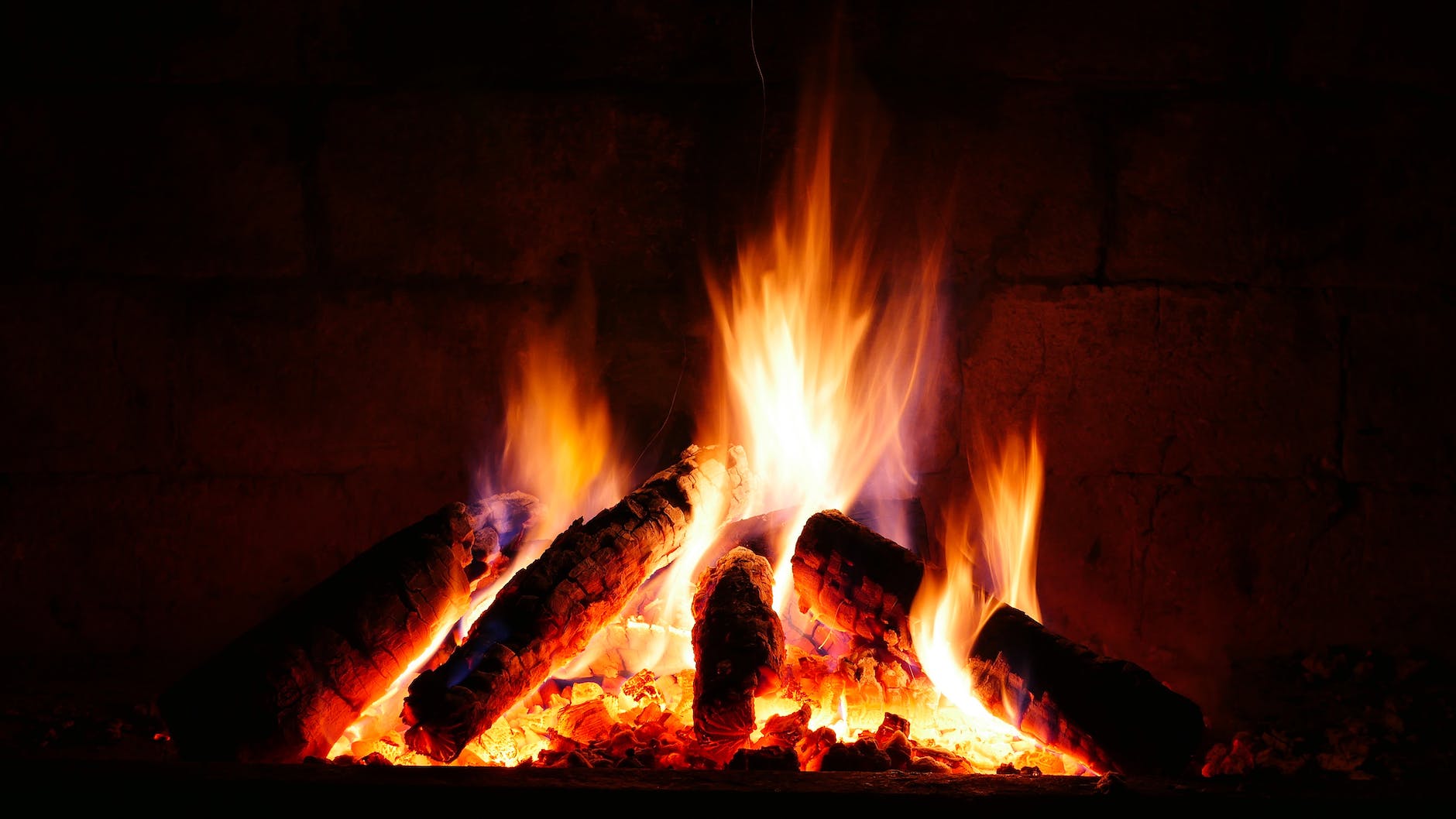
As you probably know, jolly ol’ Christmas has most of its roots in the good ol’ tradition of Yule and the of the Winter Solstice, pre-Christian celebrations that relate to the beginning of shorter nights and the associated return of the sun.
Lot’s of the practices of modern Christmas originate from these Pagan beliefs, and one that survives to this day is the Yule Log.
This is a specially selected log which is burnt on the hearth or fire place. Some traditions state that it should be partially burnt on each of the twelve nights of Christmas, while others suggest it should burn away completely in one sitting, or else bad luck will befall the household. Still others save a piece of the log from burning and use this to light the next year’s log.
The act of burning of the wood is likely a representation of the sun and it’s rebirth, and the practice is known across Europe under a verity of names including “Christklotz” in Germany, “Madeiros de Natal”in Portugal and “Ashen Faggot” in the British West Country, a term that’s been used against me in it’s entirety more than once.
In some places, the traditional wooden log has morphed into a chocolate dessert.
Carol Singing
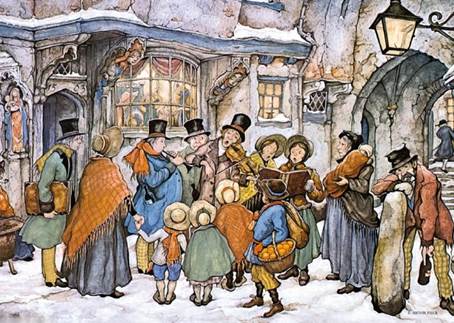
Much like trick-or-treating, the history of groups going from door to door – singing, in this case – is thought to originate in the British tradition of Mummering.
When Mummering (also known as mumming or janneying) friends would go door to door, often in disguise, and exchange songs, performances or jokes, offered food and drink in return. Sometimes, the group would be added to, as the inhabitants of each house would join in for the next.
This practice is also similar to wassailing, celebrated on Twelfth Night and Christmas Eve. Two categories of wassailing is thought to exist, one is as described above, and the other replaces homes with the local orchard, where the trees are serenaded in hopes that they produce a bountiful cider crop the next year.
Us Welsh folk take the practice of mummering, or wassailing, a step further, by adding a ghostly mare in the shape of a decorated horse skull named the Mari Lwyd. I’m pleased to add that my local Mari Lwyd is set to return in January after a long break caused by covid. Follow me on instagram to join in the fun.
Christmas Tree

One of the most wonderful of all Christmas traditions, the decoration of evergreen trees and their relocation indoors has a long and wonderful history.
It’s thought to have developed in Central Europe, and trees were traditionally decorated with paper roses, apples, wafers and sweets and candles, although the latter has been replaced with electric lights (safety first!).
Some believe the practice originates in the 16th century when Protestant reformer Martin Luther added a candle to a tree, but others believe the origin goes even further back, to medieval times. Here, plays were preformed on Christmas Eve and included a decorated tree to represent the tree of knowledge. Others believe the practice dates back even further, and relates to the Viking and Saxon practice of tree-worship and represented the Yggdrasil – the central, sacred tree in Norse mythology.
In the UK, the addition of Christmas trees in the home was popularised in Victorian times, and continues to this day.
Christmas Superstitions and Traditions Around the World
There are as many Christmas traditions and superstition around the world as there are bulbuls on a tree! They include:
- In Greece, old shoes are burnt and the smell is thought to drive away Kallikantzaroi – Devilish creatures from Southeastern European and Anatolian folklore.
- In Czechia, finding a single fish scale beneath the plate of your Christmas meal is a sign of good luck and prosperity. Fish is a staple of a Czech Christmas dinner.
- For Christians in the Philippines, having a bath on Christmas Day risks washing away your blessings.
- Being born one Christmas Day is either good luck or bad luck, depending one who you ask. In Germany and Poland, being born during the twelve days of Christmas may mean you’re destined to become a werewolf.
- Don’t feel bad about having an extra mince pie after Christmas dinner. According to some, it’s bad luck to refuse it!
- Thanks to a 1974 advertising campaign by KFC, Christmas Day in Japan isn’t complete without visiting this popular take out.
- In Ukraine, spiders and cobwebs are a traditional symbol of Christmas. This comes from a folktale about a poor widow who was unable to decorate a tree for her children. The household spiders took pity on her, and when the family awoke of Christmas morning, beautiful cobwebs had been spun all over the tree.
- It’s bad luck to keep Christmas Decoration up past Twelfth Night (January 5th)
In the mood for some more Christmas Creeps Check out this list of Christmas Friends and Fiends or this in depth look at the one and only Krampus: The Christmas Boogeyman
Don’t forget to subscribe and follow our social channels below!


 The Hawthorn Files