
For the first time since before covid, the Mari Lwyd returned to my home town this weekend!
As Chepstow sits on the boarder of South Wales and England, the delightful tradition of the Mari Lwyd is combined with Wassailing and features Morris Dancing teams from both sides of the boarder.
What better time to explore these two peculiar winter folk customs that take place all around the British Isles.
Mummering Origins
Like all good folk traditions, the Mari Lwyd and Wassailing are forms of Mummering – but just what is that? Even if you’ve never heard the term before, if you grew up in British or British-influenced countries, like America, you’re certainly familiar with it.
Mummering is the winter-time tradition of visiting house to house, for merry-making – usually dressed in disguises. When the Mummering group knocked on your door, they’d dance, sing or recite short plays and it was the host’s job to identify each person before offering food or drink to the party. When the Mummers had their fill, they’d move on to he next house, sometimes with the former host in tow.
Trick-or-Treating and Carolling are also rooted in this tradition.
Wassail
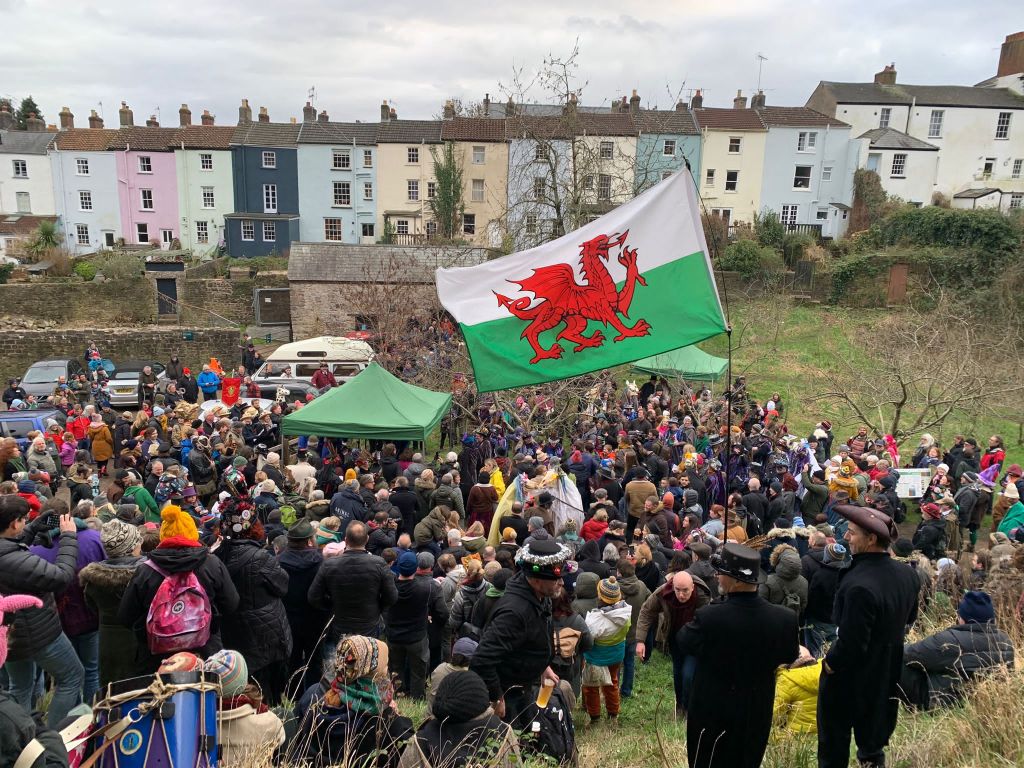
House-to-house wassailing follows the same pattern as Mummering, except that the host would be offered a drink from the wassail bowl – a wooden bowl filled with cider – in exchange for gifts.
Orchard Wassailing is an older custom and better reflects most modern wassails. As the name suggests, takes place in apple orchards. Here, wassailers would visit these orchards, singing and blessing the trees to ensure a bountiful harvest for next years cider and scaring away any bad spirits that took up residence over winter. We also left bread hanging from the orchard branches to help feed the good spirits that reside there.
This was traditionally carried out of Twelfth Night – usually 5 or 6 of January, or on “Old Twelfth Night” – the 17th January – reflecting the time before the introduction if the Gregorian Calendar in 1752. This is why our Wassail took place on the 20th – the closest weekend to old twelfth night.

Here We Come A-Wassailing
In the middle ages, wassailers would be made up of peasants who would visit their lords and bless their homes in song in return “charitable giving”. This is one of those traditional folk songs, and the one that we sung during our wassail.
Here we come a-wassailing
Among the leaves so green;
Here we come a-wand’ring
So fair to be seen.
REFRAIN:
Love and joy come to you,
And to you your wassail too;
And God bless you and send you a Happy New Year
And God send you a Happy New Year.
Our wassail cup is made
Of the rosemary tree,
And so is your beer
Of the best barley.
REFRAIN
We are not daily beggars
That beg from door to door;
But we are neighbours’ children,
Whom you have seen before.
REFRAIN
Call up the butler of this house,
Put on his golden ring.
Let him bring us up a glass of beer,
And better we shall sing.
REFRAIN
We have got a little purse
Of stretching leather skin;
We want a little of your money
To line it well within.
REFRAIN
Bring us out a table
And spread it with a cloth;
Bring us out a mouldy cheese,
And some of your Christmas loaf.
REFRAIN
God bless the master of this house
Likewise the mistress too,
And all the little children
That round the table go.
REFRAIN
Good master and good mistress,
While you’re sitting by the fire,
Pray think of us poor children
Who are wandering in the mire.
REFRAIN
Mari Lwyd

Interest in this niche Welsh custom has exploded in recent years, and why shouldn’t it?The Mari Lwyd, meaning “Grey Mare”, is a wonderfully creepy Christmas tradition originating inn South Wales.
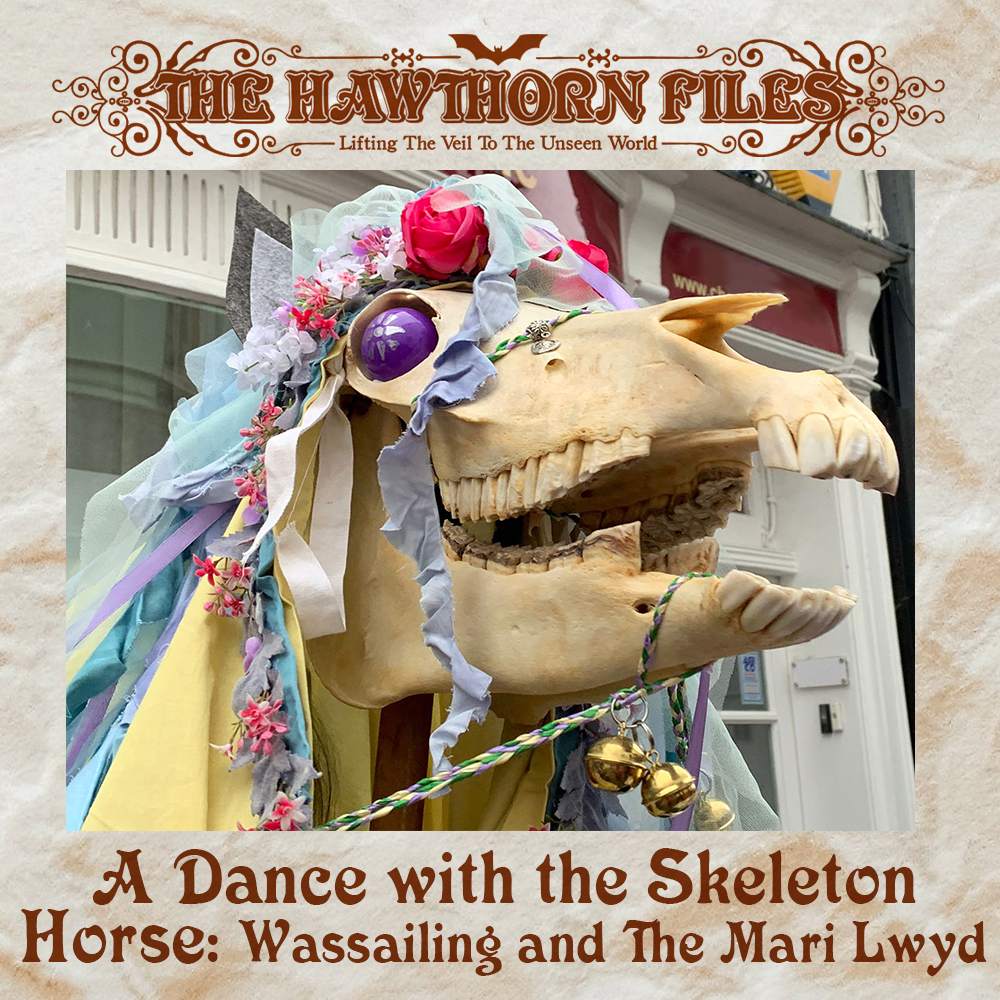
It follows the basic Mummering formula of house to house visitation, but with one unique addition – a horse skull.
This skull is decorated with ribbons, bells and sometimes glowing eyeballs, and leads the party through the community, visiting houses and pubs. Instead of a simple song, a pwnco took place.
This pwnco is an improvised rhyme or song, where the party will plead their case to be let inside. The host replies in a similar format with rhymes to keep them out. The horse and the hosts rap battle back and forth until either side (usually the host) gives up and the party will enter, drinks some beer, and go on to the next house. It was considered good luck to be visited by the Mari Lwyd, so she usually wins. This was traditionally done in Welsh and in some places, the horse was accompanied by the British stock characters, Punch and Judy.
Although some believe there must be an older, pagan origin for the Mari Lwyd, the earliest account of this tradition comes from the 1798s. Its popularity peaked between the in the late 19th century, but the drunkenness and associated mischief fell out of favour as the Church in Wales grew, and combined with a loss of Welsh speakers, the Mari Lwyd fell out of favour until its recent, well deserved resurgence.

Don’t forget to subscribe and follow our social channels below!

 The Hawthorn Files