
The world is full of mysteries – What happened to The Mary Celeste? Who or what was Gef the Mongoose? Where do the socks that disappear in the washing machine go? Will anybody ever love me?
Let’s discuss three of the world’s most infamous unsolved mysteries.
The Voynich Manuscript
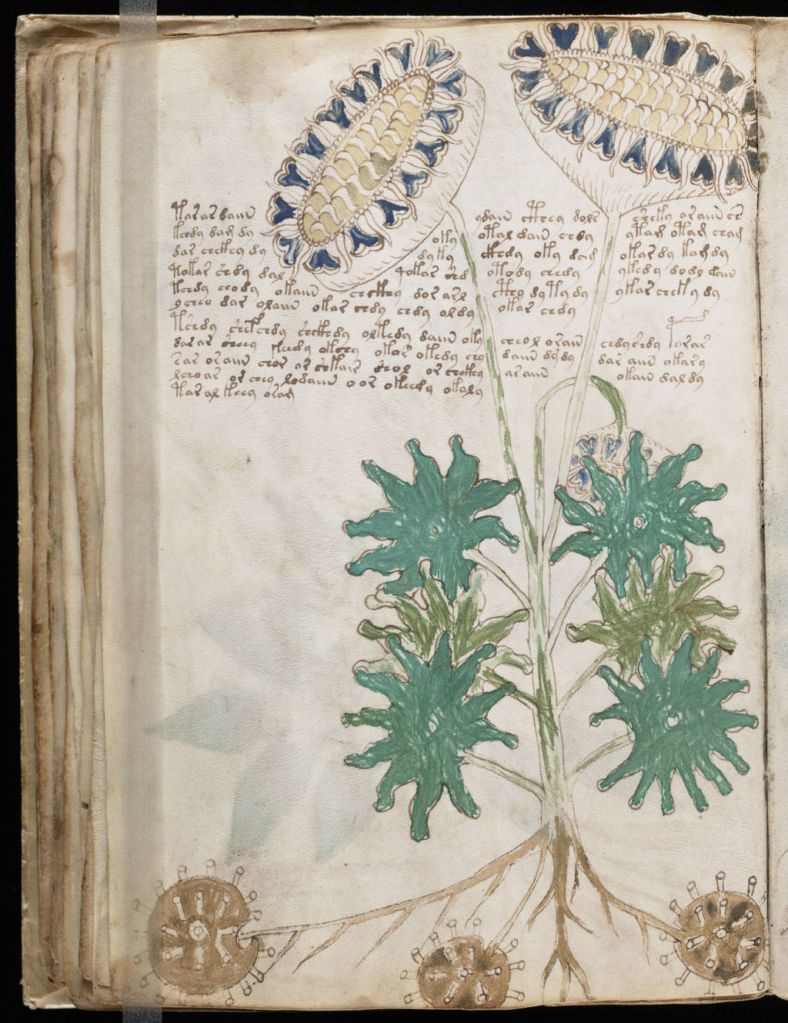
If you’re a fan of the unknown, you’ve probably heard about the Voynich Manuscript. This illustrated codex is handwritten and thought to contain botanical, pharmaceutical and celestial matters. There’s just one problem. No one can figure out what it says.
Theories bounce between an unknown language and complex code, but as of writing, the contents of the Voynich Manuscript have yet to be deciphered.
We can take a stab at its subjects due to the vast illustrations that accompany the writing, although some bare little resemblance to known items.
Due to carbon dating, one thing we know for sure about the manuscript is that it was written between 1404-1438, although the why’s and who’s of it’s creation is still a mystery. The book’s ownership can be traced to the early 1600s, where it bounced between alchemists until being acquired by Wilfrid M. Voynich, a Polish-American antique book dealer in 1912. It’s currently in the hands of the Yale Library, which has helpfully made a digital copy of the codex available here.
So who wrote the Voynich Manuscript and what was its purpose? It most likely functioned as a reference guide for early healers and alchemists, although some suggest its contents may be complete fiction or that it even describes an alien world that the unknown author visited, or better yet, describes their home planet. Some even suppose the whole 240 page book is a hoax, although I think that’s unlikely given the time it would have taken not produce – remember ever strange work and illustration has been done by hand.
Perhaps we’ll never know for sure.
The Dyatlov Pass Incident
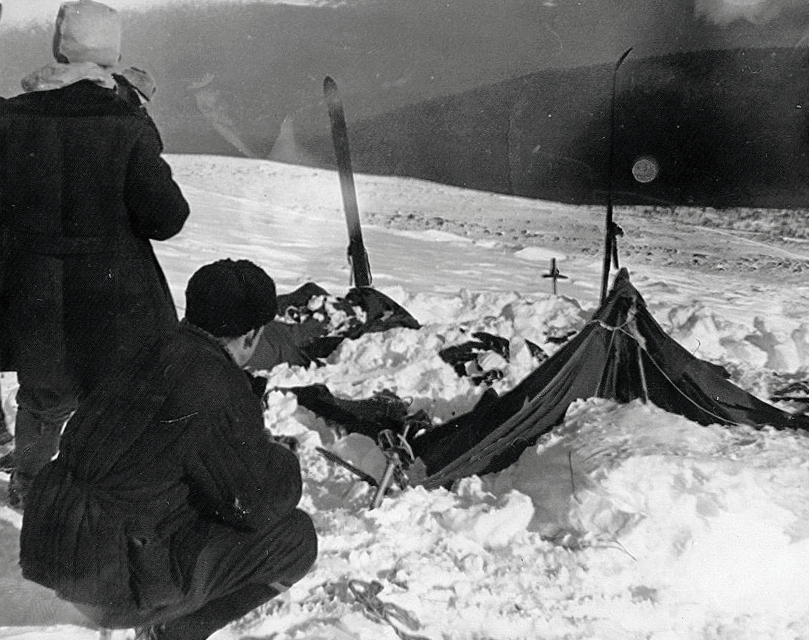
Any list of unsolved mysteries would be incomplete without discussing the mysterious death of 9 Russian hikers in February 1959.
The group of friends, lead by Igor Dyatlov – who’s name was posthumously given to the area of the incident – were hiking in the Ural Mountains when, overnight, they ran into trouble.
The ‘trouble’ in question is still hotly debated, but whatever it was resulted in the death of all 9 hikers. The only survivor was Yuri Yudin, who turned back early in the expedition due to illness.
When the group did not return, a search was launched and their bodies were found. The tent had been torn open from the inside and it was clear the group had left on foot in a hurry – some of the surrounding footprints were barefoot, socked, or wearing a single shoe. Two were found inside the tree-line, near a makeshift fire. Between their and the camp were three more bodies. The final four bodies were found two months later, under four metres of snow in a creek inside a ravine.
At first, it was assumed the group had died from hypothermia, since there were no outward signs of injury, but upon further investigation, three of the deceased had evidently been killed by severe chest or head trauma.
The four of the bodies that had been found in the creek had damage to the soft tissue of their faces – one was missing a tongue, and others were missing there eyes.
Additionally, one of the deceased’s clothes showed a higher than average level of radiation and it was suggested that the skin of the hikers had a “deep brown tan” at their funerals.
To make matters weirder, a separate group of hikers, about 30 miles south of the incident, reported seeing orange spheres in the sky to their north.
So, what on earth happened?
The most likely explanation is the avalanche theory. In fact, when the case was re-examined in 2019, this was the conclusion that was reached. The report suggested that this caused the hikers to flee the tent, some in a state of undress, and died of hypothermia. The avalanche theory also explains the trauma related injuries.
However, some claim that the location and state of the site did not suggest an avalanche was possible. Since the incident, over 100 expeditions have been made in the region, and none have reported conditions that would lead to an avalanche.
Another hypothesis is that of katabatic wind, which although rare, can be violent. A sudden surge of wind would have made the tent uninhabitable and caused the group to flee to the tree-line, where the first two died of hypothermia. It’s suggested the group then split in two and formed shelters in the snow – one of which collapsed and caused the traumatic injuries. The others then froze on their way back to the tent.
Some also believe this wind may have caused infrasound, which can induce panic attacks, sending the group into distress. The strange state of the bodies being explained by the natural decomposition process and scavenger activity.
Still, there are those who believe military testing, aliens or even yetis were responsible for the disaster. After all, what else explains the radioactive clothing and orange lights?
Overtoun Bridge

In West Dunbartonshire, Scotland, sits a 19th-century house and estate, known as Overtoun House. Sitting to the west of the house is a small bridge, called Overtoun Bridge. Although it may seem to be a perfectly ordinary bridge, it is infamous the world over and known by some as the “Bridge of Death” or, the “Dog Suicide Bridge”.
Why? Because since the 1950s, a disturbingly large number of dogs have jumped from the bridge.
All sorts of dogs from golden retrievers to spaniels have fallen or “jumped” from the bridge, in a leap that seems to be “out of character” for many.
Now let’s be clear – dogs lack the mental capacity to commit suicide – but what exactly is going one here?
Some believe the land is closely associated with dark spirits due to its links to ancient druidic practices and there is one horribly dark tale that points to this association.
In October 1994, a man threw his two week old son from the bridge to his death before attempting suicide. He allegedly chose the site due to its paranormal significance, as he believed his son was the Devil.
Sadly, this is the result of nothing other than mental illness, but it has become unfortunately linked to the supposed “jumping” of dogs from the bridge, some claiming this is due to the animal’s sensitivity to the paranormal.
What is more likely, is that the surrounding foliage and ravine below are home to population of mice, squirrels and, most pungently, mink. The dogs – often long nose breeds, – are thought to catch the smell of these little critters and leap to the other side of the wall to chase them, not realising that the “other side” in 50 foot below them.
Although the present owners of Overtoun House suspect the land holds some old spiritual quality, it’s certainly unlikely to be making dogs leap from the bridge. That being said, if you find yourself visiting Overtoun House, be sure to keep your furry friend on na leash.
Don’t forget to subscribe and follow our social channels below!


 The Hawthorn Files
One Comment Add yours