
The Somerton Man or The Tamàm Shud Case
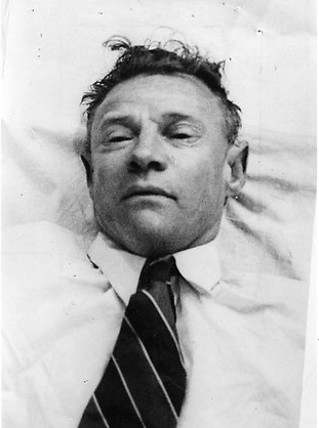
On December 1st 1948, a body was found on the beach of Somerton Park, Adelaide, South Australia. The unidentified male was well dressed in what seemed to be American clothes. These were embroidered with the name “Keane”, although all other identifying labels had been removed. The man was was found slumped against a wall and, upon first appearance, appeared to have died in his sleep.
The only items in his possession of note included an unused rail ticket, and a scrap of paper with the phrase “tamàm shud” – Persian for “it is over” or “finished”.
It was later discovered that the scrap had been torn from the final page of Rubaiyet of Omar Khayyàm, a book of 12th century poetry. Strangely, the book itself was found in an unlocked car, placed there without the owners knowledge. Inside the cover of the book, was a the following code:
WRGOABABD
MLIAOI
WTBIMPANETP
x
MLIABOAIAQC
ITTMTSAMSTGAB
Attempts to decode the strange writing were unsuccessful, and the coroner eventually reported the man died from heart failure due to poisoning. Murder was not ruled out as a manner of death.
With these strange findings and lack of answers, theories abound regarding the man’s identity. It was assumed he may have been a spy, a black market racketeer or a scorned lover, but thanks to advances in DNA, we’ve finally been able to put a name to the face of The Sumerton Man: Carl Webb.
According to research carried out by Adelaide University’s Derek Abbott, Webb was born in November 1905 in Melbourne, and married his wife, Dorothy in 1941. Webb was a seemingly troubled man, solitary and morose, he often wrote poems about death and once attempted suicide by poisoning himself with ether. His marriage was not a happy one, with Dorothy reporting both physical and verbal abuse and the couple eventually separated.
Abbott speculates that Webb went to Adelaide to find Dorothy, but was unable to do so, and instead took his life with poison on the beach of Somerton Park. Some suspect Webb may have been looking for a different woman, who’s phone number was also found written in the poetry book.
But what about the strange code? Well, it turns out Webb enjoyed horse racing and the “code” is suspected to be related to names of horses. As for the clothes and the enigmatic “Keene”, it was discovered that Webb’s sister married a Thomas Keene, and had a son, John, who died in World War II. John was thought to have spent time in America, and Webb may have inherited some of his nephew’s clothes.
Although there are questions that remain unanswered in The Sumerton Man case, we can at least put to bed the more outlandish suspicions of his demise.
The Bloop
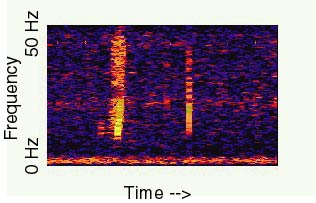
In 1997, an ultra-low frequency underwater sound was detected by the American National Oceanic and Atmospheric Administration. It made a “bloop” sound and thus, The Bloop was born.
The sound came from somewhere in the South Pacific Ocean and was so loud it was hears on sensors 3000 miles away.
No one knew what made the sound. Some scientists believe that because of the rapid variation in frequency, The Bloop could only have been made by a living animal. The problem was, it was too loud. No animal -that we know of – could have caused the sound.
So, what was hiding in the deepest depths of the ocean? Does some eldritch horror lurk at the murky depths?
Maybe, but they weren’t responsible for The Bloop.
It was an ice quake. That’s like an earthquake, but with ice. Results of humongous glaciers rubbing together, smashing against each other or breaking off into the sea can all cause bloop-like noises. So although we can tick this unsolved mystery as solved, it doesn’t mean that Cthulhu isn’t slumbering somewhere in the deep ocean.
The Tunguska Blast

In June of 1908, a huge explosion ripped through the Siberian wilderness. The event is best described by eyewitness S. Semenov as follows:
At breakfast time I was sitting by the house at Vanavara Trading Post [approximately 65 kilometres (40 mi) south of the explosion], facing north. […] I suddenly saw that directly to the north, over Onkoul’s Tunguska Road, the sky split in two and fire appeared high and wide over the forest [as Semenov showed, about 50 degrees up – expedition note]. The split in the sky grew larger, and the entire northern side was covered with fire. At that moment I became so hot that I couldn’t bear it as if my shirt was on fire; from the northern side, where the fire was, came strong heat. I wanted to tear off my shirt and throw it down, but then the sky shut closed, and a strong thump sounded, and I was thrown a few metres. I lost my senses for a moment, but then my wife ran out and led me to the house. After that such noise came, as if rocks were falling or cannons were firing, the Earth shook, and when I was on the ground, I pressed my head down, fearing rocks would smash it. When the sky opened up, hot wind raced between the houses, like from cannons, which left traces in the ground like pathways, and it damaged some crops. Later we saw that many windows were shattered, and in the barn, a part of the iron lock snapped.
In the aftermath of the blast, it was discovered that 830 square miles of forest had been flattened – that’s an estimated 80 million trees, but upon investigation, no source of the explosion could be found.
The energy released was 1000 times greater than the atomic bomb dropped on Hiroshima almost 40 years later, but strangely, no crater was discovered.
Scientists and conspiracy theorists have debated the cause of the event for decades, blaming anything from aliens, to natural gas explosions, to the collision of antimatter, button recent years, the unusual case has found a reasonable explanation.
Now it’s generally agreed that the explosion was caused by a 200ft meteor that exploded midair. This resulted in an airburst which levelled the trees below the blast zone without leaving a traditional crater behind as we might expect.
Although this may be the obvious explanation to some, there are still those who believe a higher power was somehow involved. The Tunguska Event has since inspired all manner of media, including Doctor Who, The X-Files and 2000 AD.
Don’t forget to subscribe and follow our social channels below!


 The Hawthorn Files