
I do love supposedly cursed items and the stories behind them. Let’s explore another three of my favourites.
The Black Prince’s Ruby and The Sultan’s Curse

Despite its rather grand name, the Black Prince’s Ruby isn’t a ruby at all, it’s a spinel. This isn’t why the gem is cursed, however. That’s a much darker story.
As of today, the Black Prince’s Ruby is set in the Imperial State Crown of the UK, and its history is just as bloody as that of the monarchy itself.
Back in 1362, the gem was owned by Abu Said, the Sultan of Granada. It travelled with him to visit King Pedro of Castile in an attempt to secure peace between their warring kingdoms.
Alas, the King had no intention of peacemaking and instead brutally murdered the sultan and his accompanying servants. The stone was taken from the Sultan’s corpse, supposedly triggering the curse.
When King Pedro’s throne was threatened, he enlisted the help of Prince Edward of Woodstock – known as the Black Prince. As thanks for his service, the Prince was gifted the ‘ruby’ and it gained its poetic nickname.
King Pedro died three years later and the Black Prince didn’t fair much better, dying of illness before he could inherit the English throne.
The stone then disappears until 1415, where it was worn by Henry V during the Battle of Agincourt, which he survived after the gem-encrusted helmet was struck with a battle axe. In 1485, Richard III is said to have worn it into the Battle of Bosworth, where he was killed.
By the 1500s, the ruby was thought to have been set in the crown jewels and made its way through British royalty until Charles I’st execution where it end up in the hands of Oliver Cromwell, who had the crown disassembled and sold.
There’s no trace of the gem until the restoration of the monarchy in 1660, where it ended up in the hands of James II, who was unfortunately exiled three years after his coronation, when the stone came into his possession.
Was the curse itself responsible for the deaths and injuries surrounding it, or was it’s bloody reputation just piggy-backing off a particularly gruesome historical period? Either way, the Black Prince’s Ruby is still set in the British crown jewels, so who’s to say if it’s dastardly reign is over.
The Screaming Skull of Burton Agnes Hall
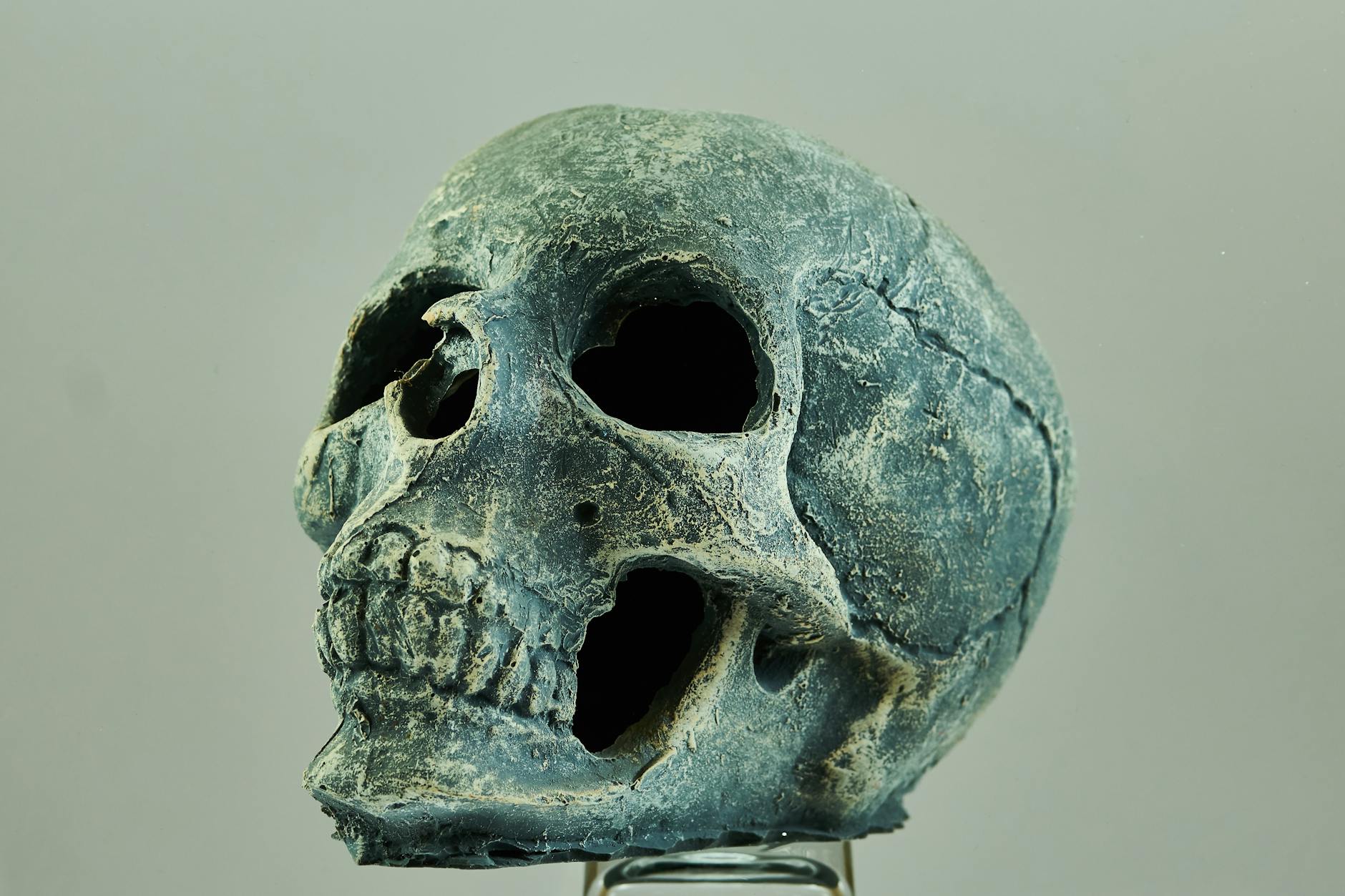
Katherine Griffith, better known as Anne, died on Burton Agnes hall in 1620, after being attacked and robbed in a nearby village. The youngest of three sisters, Anne was besotted with her family home, which had been built by her father. As she lay on her death bed, she supposedly begged her attending sisters to inter her body in the house, apparently stating that she’d “never rest until part of her could remain in our beautiful home as long as it shall last.”
Thinking this the delirious ramblings of a dying woman, the sisters had Anne buried in the local churchyard, but her ghost was having none of it. Anne’s spectre roamed the house, moaning and screaming, unable to rest until her final wishes were honoured.
With nothing else for it, the sisters arranged for Anne’s body to be dug up and her head – by this time, a skull – returned to the house.
As Anne promised, her ghost fell silent, as her skull happily watched the world go by. However, probably unnerved by its presence, many have tried to remove the skull over the years, but have been met with chaos each time. As of today, the skull is said to remain in the house, but has since been boarded into the walls, never to be disturbed again.
Busby’s Stoop Chair
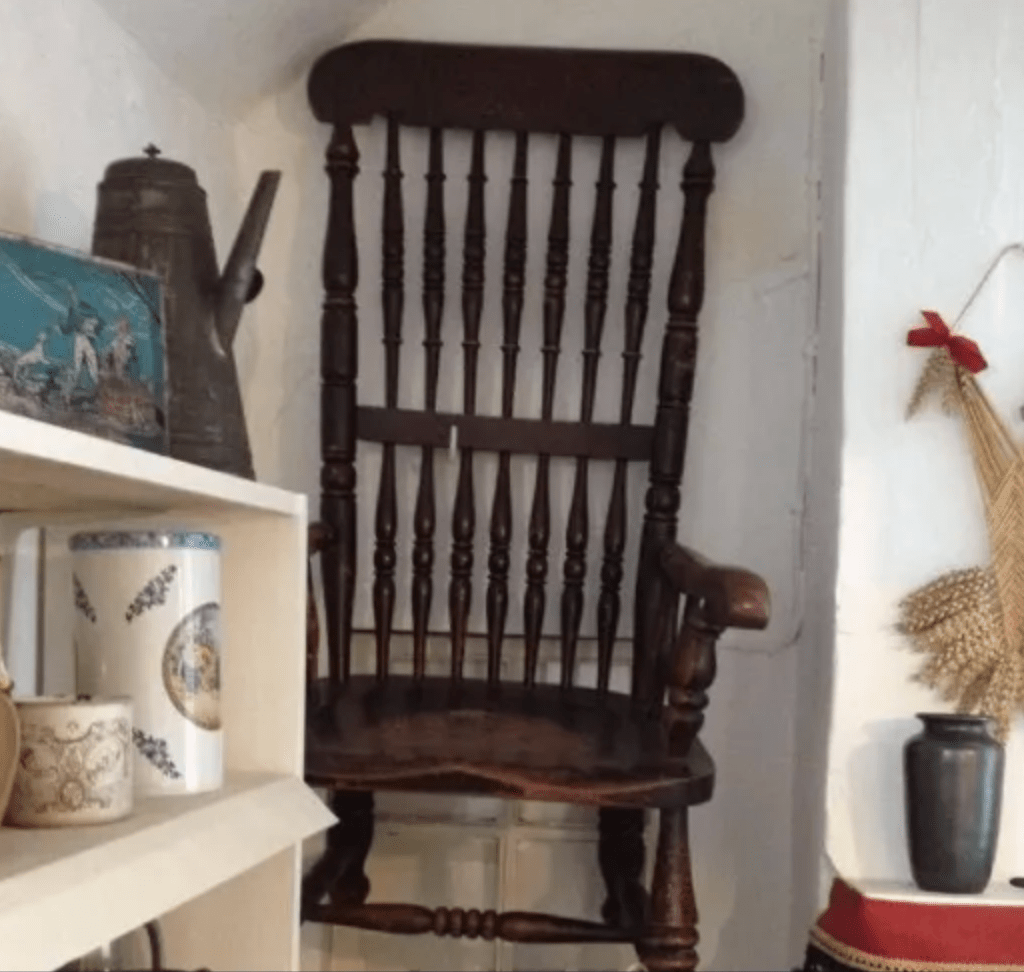
If someone offers you a seat in the local club, you may want to think twice before sitting in it.
This oak chair in Thirsk, North Yorkshire, is said to be cursed by local murderer, Thomas Busby.
As the story goes, Busby was convicted for the murder of his father-in-law, with whom he ran a number of criminal enterprises. There are a few stories as to the chair’s involvement with the murder.
Some say Busby was granted a last stop at the local pub on his way to his execution. As he finally rose from his favourite chair, he reportedly cursed anyone who dared sit on it again. Other’s say he was arrested in the chair, and cursed it as he was lead away. Yet another story tells that the Busby found his victim – the pub landlord – was sitting in his favourite chair and flew into a rage before murdering him.
However it came to be, the pub’s locals began daring one and other to sit on the chair, and death swiftly followed. During the Second World War, airmen who were based nearby used to say that anyone who sat in the chair would none return from the battlefield.
In an attempt to quell the rumours, or perhaps to stop the associated deaths, the chair was donated to the Thirsk museum, where it hangs on a wall to prevent all buttocks from making its acquaintance.
When furniture historians examined the chair, they dated it to 1840, a full 138 years after Busby’s execution, but why let that get in the way of a good story?
Don’t forget to subscribe and follow our social channels below!



 The Hawthorn Files