
Is it getting hot in here, or is that just me?
Believe it or not, the idea of people randomly bursting into flames isn’t confined to the realms of fiction.
Let’s discuss this strange phenomenon and uncover the truth.
Be warned, there are some pretty gnarly pictures ahead.

What is Spontaneous Human Combustion?
I’m so glad you asked. Spontaneous Human Combustion is exactly what it sounds like – it’s the death of a person by burning, where no external ignition source can be found. According to the head of ParaScience International, Larry E. Arnold, there has been around 200 reports of this apparent phenomenon over the past 300 years.
Although there are a plethora of theories which we’ll get into shortly, there seems to be no consensus on it’s cause, with most scientists writing the happening off as pseudoscience, but those who believe have identified certain characteristics as follows:
Supposed Cases
The first document case of apparent spontaneous combustion happened way back in 1700s, when Countess Cornelia Zangari Bandi, an Italian noblewoman and grandmother of Pope Pius VI, was found dead in her bedchamber.
After she did not awake at her usual time a maid went in to check on the countess, who had been in good spirits the night before, save for being “dull and heavy” during supper.
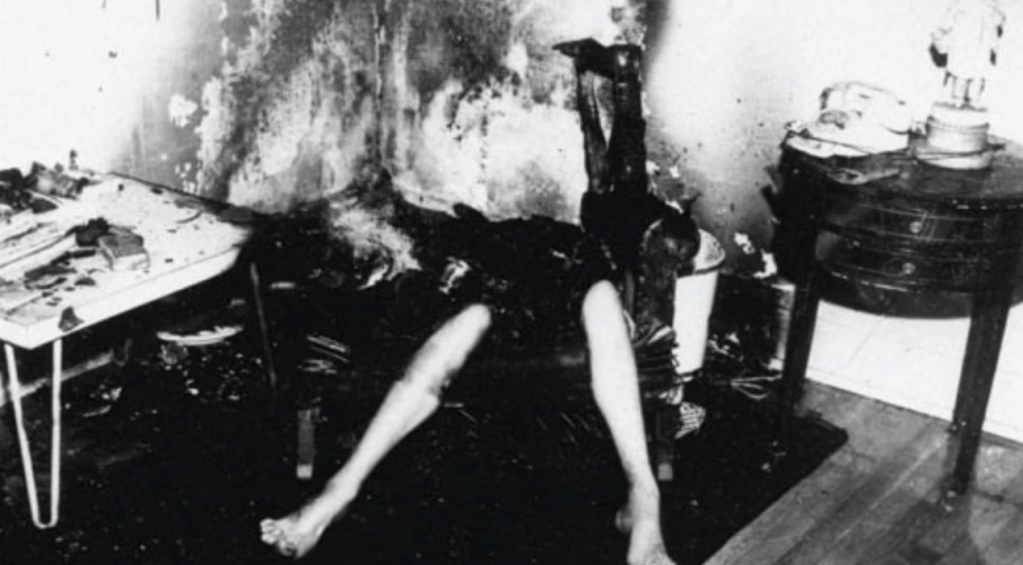
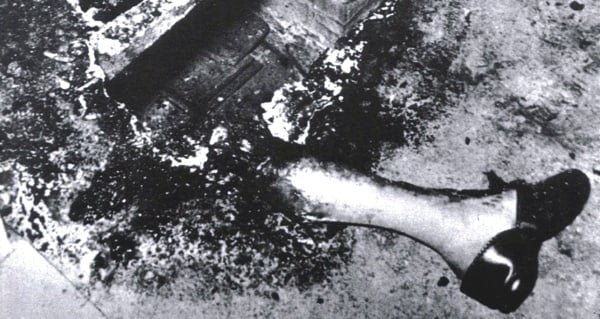
The Countess was nothing but a pile of ashes, around a metre from her bed. Only her legs below the knee, three fingers and her skull remained. The rest of the furniture was unburnt, but covered in the strange, noxious grease.
This is said to have been the case that inspired the death of one of Charles Dicken’s characters in Bleak House, although in the preface of the book, the countess is misnamed.
In more recent times – 2010 to be exact – 76 year old Michael Faherty was found dead in his home in Galway, Ireland, his body burnt to ashes. Although he was found close to a fireplace, it was determined by investigators that this was not the cause of the fire. This is a particularly interesting case, as the coroner recorded a verdict of spontaneous combustion. He is quoted to have said:
“This fire was thoroughly investigated and I’m left with the conclusion that this fits into the category of spontaneous human combustion, for which there is no adequate explanation”
Other cases are said to include, but aren’t limited to:
Theories
The most obvious explanation, and the one most science folk agree on, is that it’s impossible for a person to spontaneously combust, and therefore the source of the fire must be external. This is, of course, the likely reason behind many of these tragic deaths – Mary Reeser, for example.
Deaths seem to occur at home, to the elderly or infirm who were alone and possibly smoking, or sleeping next to an open fire. There is only one death I’ve come across where this is not the case – that of Jacqueline Fitzsimons, a 17 year old girls from Cheshire, who seemingly burst into flames while walking through the hallway of her school. Her friends managed to extinguish the flames, but she later passed away of her injuries.
So is it possible that a handful of these reported cases could really be as they appear? Spontaneous? After all, the to reduce a human to ash requires a fire of 3,000 degrees over the course of some hours. Surely a fire of that magnitude would decimate the surroundings?
Some suggest a so called Wick Effect is a possible explanation. This is when a body is kept alight through melted fat, which may be soaked up by clothing and acts like “an inside out candle”. The presence of alcohol in the body, as well as the a larger amount of fat on a victim may contribute to this fire.
Ketosis which can be caused by alcoholism, is a metabolic state that produces acetone – a highly flammable substance. Some, such as scientist Brian J. Ford have suggested this as a contributing factor for spontaneous human combustion.
This, seems to explain most cases, particularly those of smokers, but in others, where’s the spark?
The “spontaneous” part of spontaneous human combustion has spawned a number of alternative theories, including the existence of a subatomic particle called a “pyrotron”, at least according to Larry E. Arnold. He theorises that an increased level of alcohol in the bloodstream could be a contributing factor, and that the trigger itself is extreme stress.
Maybe that’s why we feel like stress will make us explode?
Other alternative theories suggest ball lighting and even poltergeist activity could be behind these seemingly random fires.
But what do you think? Is spontaneous human combustion little more than a misidentified stack of circumstances? Or is it something more? What about Jacqueline Fitzsimons? She’d previously been in a cookery class, potentially leaning against a lit burner, but how did no one see a flame until it seemingly engulfed her?
Whatever the cause, alleged cases are extremely rare, so you and I should be fine, but maybe we should make an effort to reduce our stress levels anyway, just in case.
If anyone needs me, I’ll be meditating with a fire extinguisher.
Don’t forget to subscribe and follow our social channels below!


 The Hawthorn Files