
Two things in this world are for certain – death and taxes. Let’s explore the most interesting of the two and take a trip through mythology to discover some of the coolest, cruelest and creepiest tax deities of the ancient world!
Only joking, let’s talk about death!
Egyptian: Anubis, Osiris and Ammit
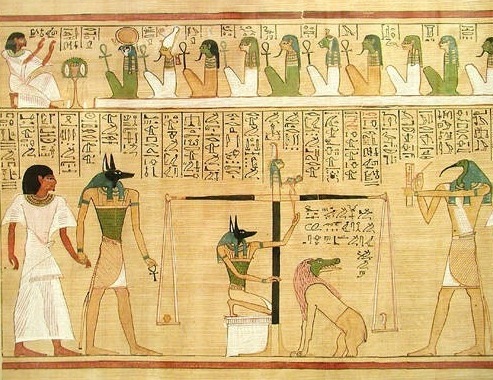
There are actually a whole host of death related Gods, Goddesses and Minor Deities across the three thousand years of the Egyptian empire, but because it’s my case-file and I make the rules, we’re going to discuss three of my personal favourites.
Anubis, the jackal-headed guardian of the dead is probably one of the most iconic pieces of Ancient Egyptian imagery to survive to the modern day. He’s also a deity I’ve worked closely with for many years.
Jackals became associated with death during Egypt’s early Dynastic period, as jackals were often seen scavenging in shallow-dug cemeteries, thus Anubis’s role became that of a protector, guide and ruler of the Underworld.
In later centuries, Anubis was replaced as ruler and became closely related to the act of embalming and mummification due to his role in the Osiris myth – but we’ll come back to that in a bit. Fun fact: his role in embalming is still recognised today with the headquarters of the British Institute of Embalmers being called Anubis House.
As well as offering protection of their physical body through embalming, Anubis would also accompany the spirit of the deceased in to the afterlife. During this journey, he would carry out the Weighing of the Heart to determine if the deceased was worthy to pass into the realm of the dead.
The heart of a person would be weighed against Ma’at – the concept of truth and justice, represented by an ostrich feather. Should the heart be heavier than the feather, the soul would be devoured by the demon, Ammit, who appeared with the head of a crocodile, forelimbs of a lion and hind-legs of a hippopotamus – three of the most dangerous animals in Egypt.
In the old Kingdom, Anubis was considered the primary death god, but was eventually replaced by Osiris, who became Lord of the Underworld, as well as the god of fertility, agriculture and resurrection. His story is reflected in the Osiris Myth, which tells of his murder at the hands of his brother, Set. After Osiris’s death, his sister-wife Isis, retrieved his body, which Anubis embalmed, leading to his resurrection, and re-birth as the Lord of the Underworld.
Breton & Celtic: Ankou
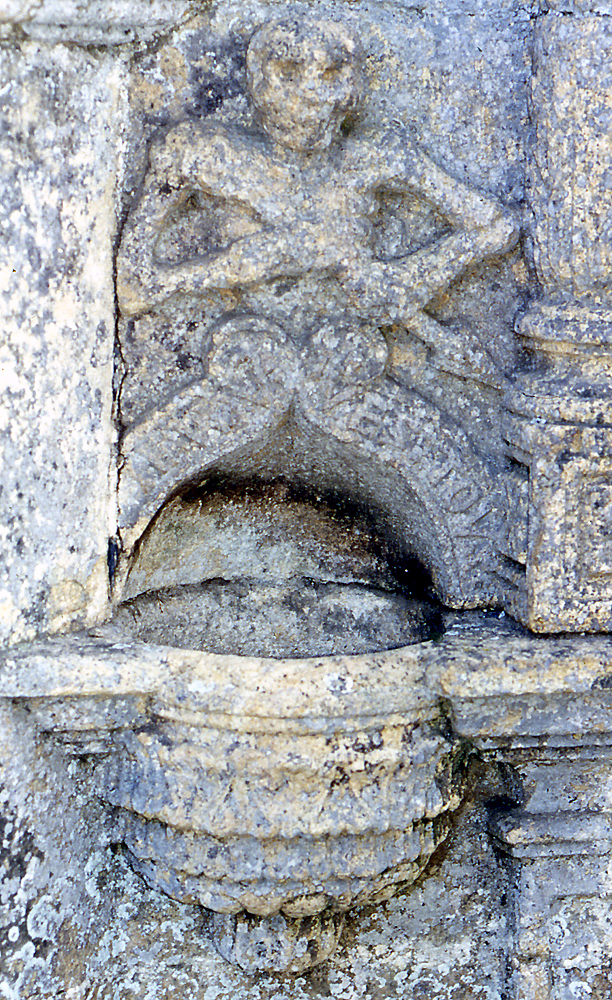
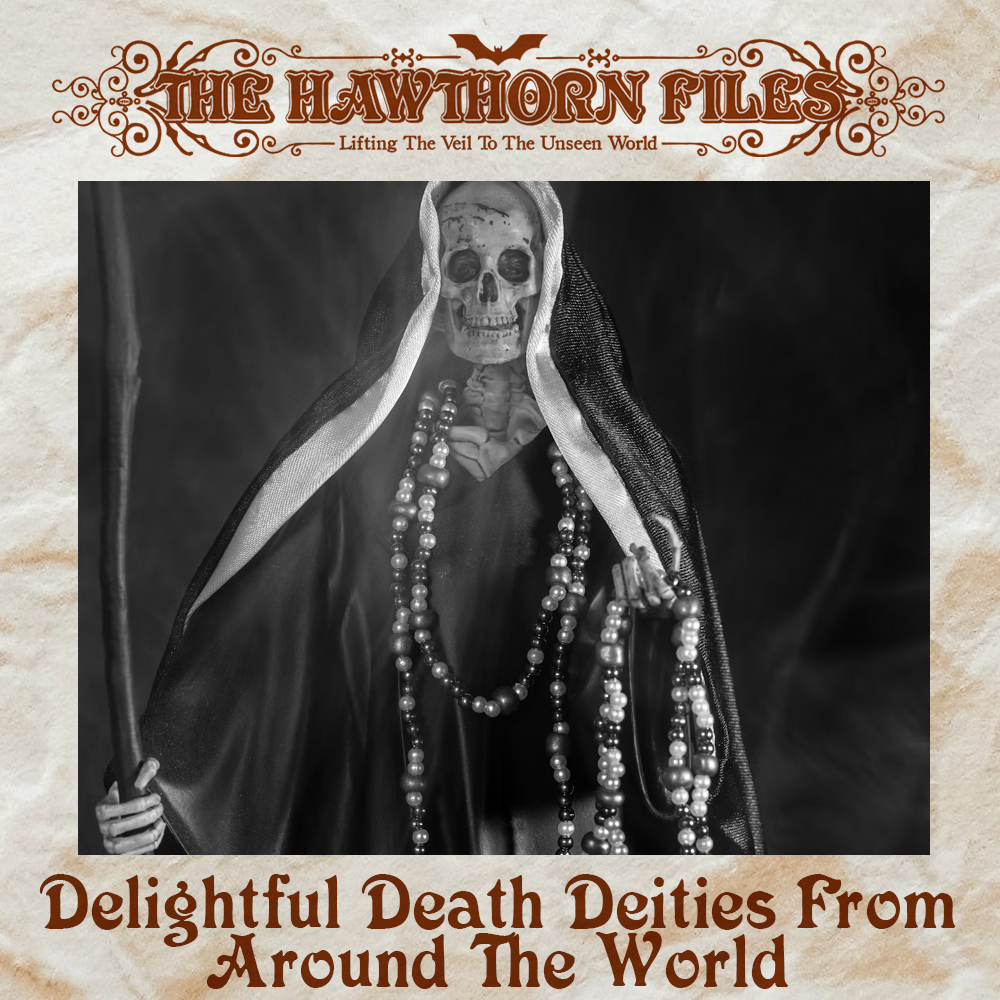
Ankou is a little known Death deity who appears in Breton, Cornish and Welsh folklore, and although his name may be unfamiliar, you’ll certainly know him when you see him – He appears as a skelton in a black robe with a large scythe. That’s right, he’s one of the bases of our old friend, The Grim Reaper!
Although usually depicted as an adult male, Ankou (also known as Ankow or yr Angau) was thought to be the spirit of the first (or last) person of the year to die and thus tasked to collect the rest of that year’s spirits. In other versions, he was the first son of Adam and Eve, or the soul of a prince who challenged Death to a hunting challenge and lost.
Ankou appears with either a cart, a coach and horses, or a wheelbarrow as he wanders fields and lanes in search of the dying. He can sometimes be found carved into churches across Brittany.
Mexico & Latin American Folk Catholicism: Santa Muerte
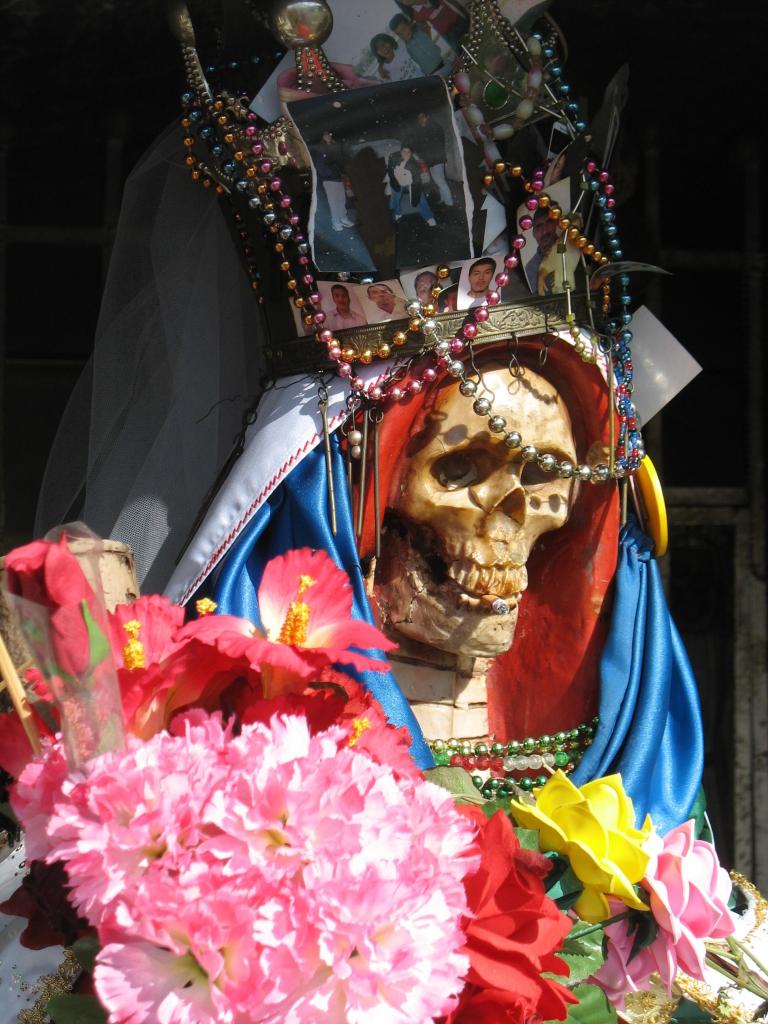
Santa Muerte or Nuestra Señora de la Santa Muerte (Our Lady of Holy Death), is a personification of death who’s worship and reverence has emerged across Mexico in recent decades.
As well as her role as death herself, Santa Muerte is also associated with healing and protection, with some believing she is the surviving christianisation of the Aztec death goddess, Mictēcacihuātl. She is depicted as a female skeleton, dressed in either bright robes or dresses and like other portrayals of the Grim Reaper, she is often depicted with a scythe and hourglass. Similarly to other Mesoamerican death deities, the owl is her sacred animal.
Catholic and protestant churches across Mexico discourage devotion to Santa Muerte, with Pope Francis condemning the saint in his 2016 Mexico visit, however this has not stopped her current rise in popularity. While veneration of Santa Muerte was done behind closed doors until the 2000s, some have estimated she currently has around 12million devotees across Mexico, Central America and the US.
Santa Muerta is also revered by Mexico’s LGBT+ community, who pray for her protection in the face of traditional Catholic ostracisation.
Don’t forget to subscribe and follow our social channels below!

 The Hawthorn Files