
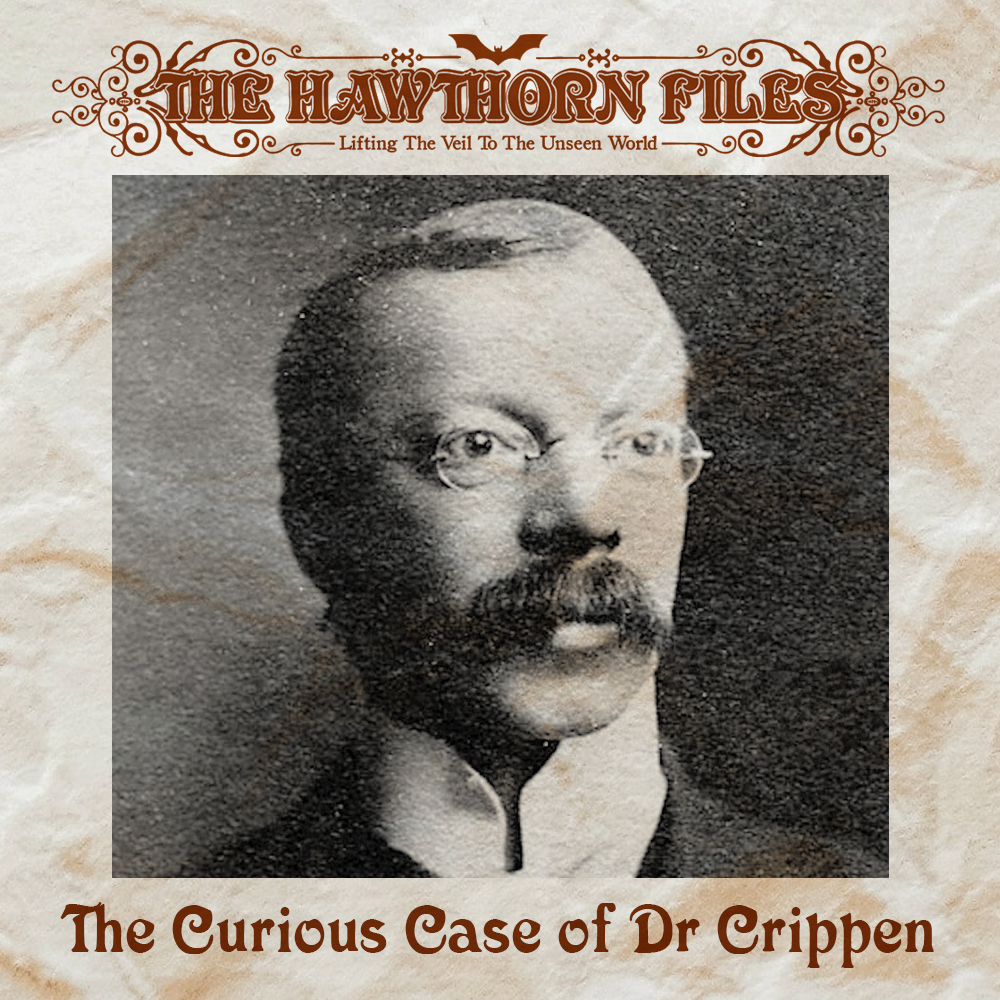
When Dr Crippen stepped aboard the SS Montrose, he and his accomplice believed they were one step ahead of the law. Unfortunately for him, it was not to be and his arrest signalled the beginning of the end for this American quack doctor and he would swiftly be found guilty of the murder of his wife.
But does this story – ripe with twists and turns – have yet one more secret to reveal? Was Dr Crippen really guilty of murder? Was the body in the basement even his wife?
Let’s take a side step into the world of true crime and explore the curious case of Dr Crippen.
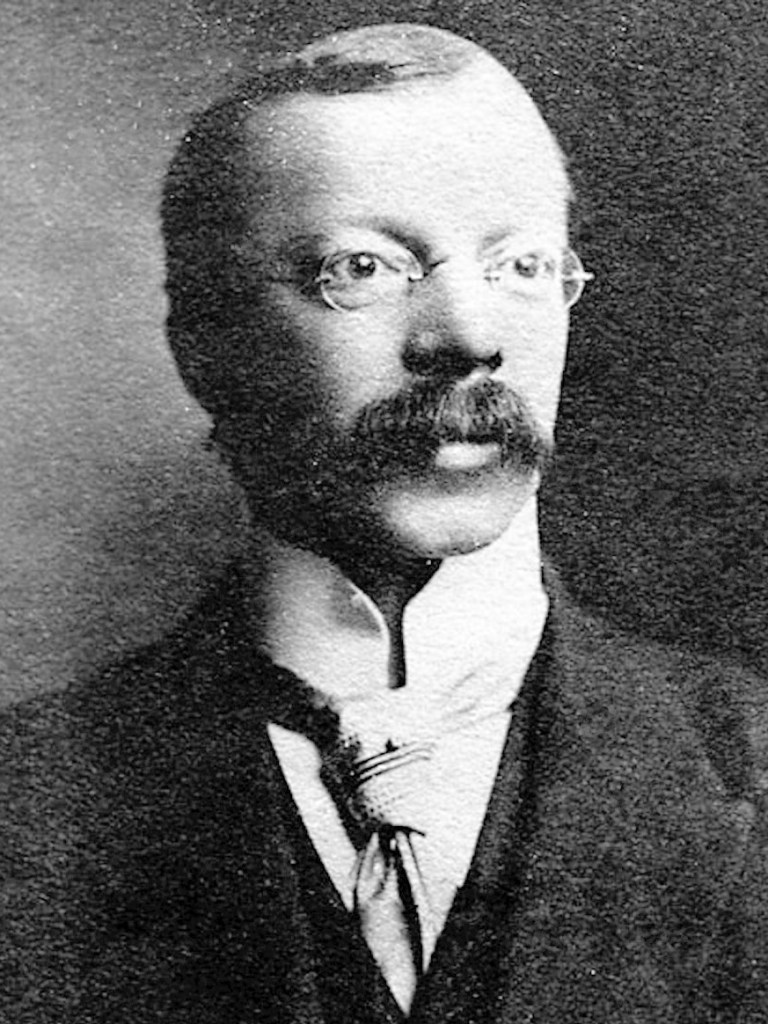
The Life of Dr Crippen
Hawley Harvey Crippen was born in 1862, in Coldwater Michigan, the only child of his parents to have survived into adulthood. He graduated from the Cleveland Homeopathic Medical Collage, married his first wife, Charlotte, and had a son, Hawley Jr.
Tragically, this early marriage would end prematurely when Charlotte died of a stroke in 1892, so Crippen left his son in the capable hands of his parents and left to establish himself in the bright lights of New York City.
New York promised a new life for the widower Crippen and he met and married his second wife, Corrine “Cora” Turner. Cora, born Kunigunde Mackamotski, was a music hall singer known by her stage name, Belle Elmore. Fully loved up, Hawley and Cora moved to London, where the former had been sent to manage the UK branch office of his homeopathic employer.
Unfortunately, this is where the threads of fate began to fray. While Crippen was considered meek and mild, Cora was wild and vivacious – domineering, some would say. Although the exact level of her musical prowess has been lost to time, her stage career fell flat in Britain and to add insult to injury, Crippen was fired for spending too much time and effort managing his wife’s failing musical ventures, rather than the office he was entrusted with.
To make matters worse, Crippen’s American qualifications were not sufficient for him to practice as a doctor in Britain. The unhappy couple eventually moved to 39 Hilldrop Crescent in Holloway, where they rented rooms to make ends meet. To add to the tension between the couple, Cora was known to have numerous affairs – including one with a lodger. Not to be left out, Crippen himself engaged in an affair with his typist, Ethel Le Neve, a whole twenty-one years younger than himself.
The Disappearance of Cora Crippen
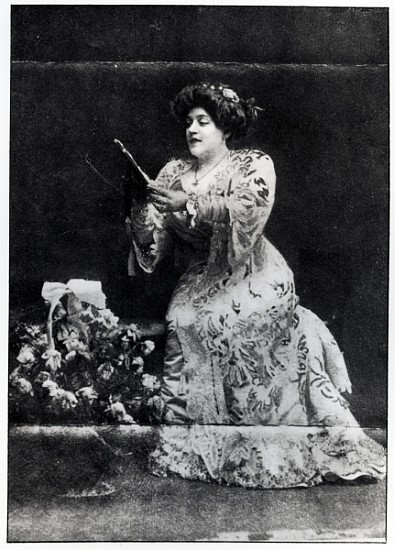
On January 31st, 1910, there was a party at Hilldrop Crescent. It was also the last time Cora Crippen was seen. When asked, Dr Crippen claimed she returned to her American homeland, where she had died and been cremated. Shortly after, Ethel Le Neve move into the house on Hilldrop Crescent, where she began to wear Cora’s clothes and jewellery.
Cora’s friends were suspicious – and rightly so. Her buddies, including renowned strongman Kate “Vulcana” Willians and actress Lil Hawthorne insisted the police take a closer look at Crippen and his lover, but when they attended the house, the police found nothing.
When questioned, however, Crippen confessed that the story was a lie, He claimed that Cora had abandoned him and returned to America with one of her lovers – a music hall actor named Bruce Miller. He had lied to save face.
The police believed him.
In fact, no one would have pried any further into the story, were it not for what Crippen and Le Neve did next – They fled to Brussels, then to Antwerp, then boarded a ship – the SS Montrose – and fled to Canada.
As it was, this piqued the police’s curiosity and they searched the house more thoroughly only to discover the flesh of a human torso under the basement floor. Though the head, limbs and even the skeleton remain missing to this day, it was identified as Cora Crippen by a piece of the abdomen – the skin had a scar that matched with Cora’s medical history.
Arrest, Trial and Execution
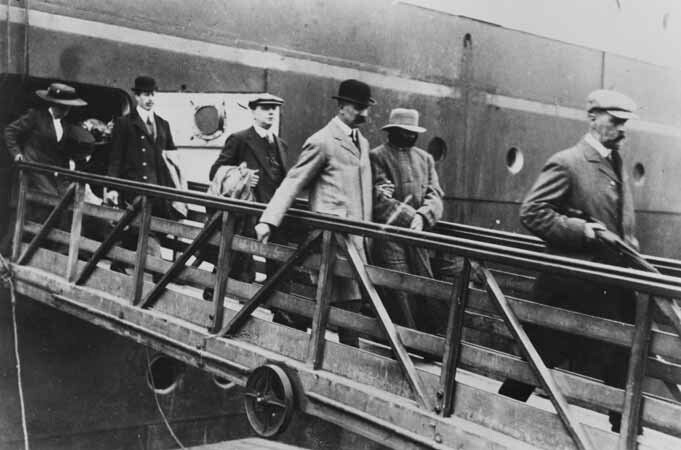
Meanwhile, Crippen and Le Neve were heading to Canada. To avoid suspicion, Le Neve was disguised as a boy and Crippen has shaved off his distinctive moustache. Despite this, the ship’s Captain suspected the two and sent a telegram to British police.
Police boarded a faster ship and arrived in Quebec before the Montrose and with the help of Canadian authorities, Chief Inspector Dew board the ship in disguise and arrested Crippen and Le Neve – this was the first arrest in the world to have involved a telegram.
Upon his arrest, Crippen is thought to have said,”Thank God it’s over. The suspense has been too great. I couldn’t stand it any longer.”
Arriving back in the UK, Crippen was tried at the Old Bailey. Evidence included the piece of skin and the discovery of a man’s pyjama top – part of a set Cora had given Crippen – which included the manufacture’s label, proving that the body had been placed in the cellar during the time the Crippen’s had lived in Hilldrop Crescent.
Crippen is said to have displayed no remorse for Cora’s death and offered no reason for it. Some theorists suggest that Cora’s death was an accidental overdose of scopolamine – a chemical found in the torso that was used as a depressant.
He was found guilty and sentenced to hang. Le Neve, who had been charged with being an accessory after the fact, was acquitted.
Dr Crippen was hanged in November 1910. Before his execution, he wrote to Le Neve, saying, “Face to face with God, I believe that facts will be forthcoming to prove my innocence.”
He was buried in an unmarked grave in Pentonville Prison, with a photograph of Le Neve. Ethel Le Neve herself went to Canada before returning to Britain and passing away in 1967.
But Was He Guilty?
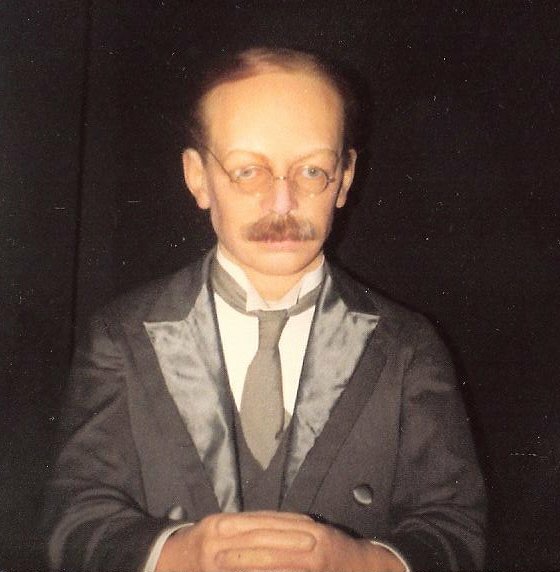
Crippen’s execution has not stopped modern researchers questioning his guilt.
Some, including crime novelist, Raymond Chandler have questioned why Crippen would have disposed of only the torso under the cellar whilst disposing of the rest of the body elsewhere, successfully. While others theorise that Crippen was performing illegal abortions, with the deceased being an unfortunate patient.
Scientist have also questioned the authenticity of Cora’s identification by only a scarred piece of skin. This was also argued during the trial itself, with the prosecution pathologist Bernard Spilsbury, maintaining that the so called “scar” possessed hair follicles – something not present in true scaring.
Modern day testing has raised further questions in the Crippen case, most notable of which come from David Foran, a forensic scientist from Michigan State University.
Using mitochondrial DNA, Dr Foran and genealogist Beth Wills compared the cellar body with surviving relatives of Cora Crippen. They did not match.
Furthermore, tests also revealed the sample contained a Y chromosome, suggesting that the body was male.
This begs the question: Was the body in the cellar Cora Crippen at all?
Well, some, including Times journalist David Aaronovitch dispute the DNA results, claiming the sample to have degraded over time and calling into question Dr Foran’s technique and methodology. Needless to say, Foran disagrees.
We also can’t completely rule out the possibility of the remains being Cora’s. The sample was tested against living great-nieces of Cora Crippen, however, it’s not inconceivable that a secret affair or unofficial adoption somewhere in the family’s history could account for this discrepancy? It’s a bit of a stretch – especially with it being mitochondrial DNA that was tested – but it certainly wouldn’t be the first family secret to have been uncovered by DNA testing.
As for the presence of the Y chromosome, it’s possible that Cora could have had an intersex condition unknown throughout her life or undiagnosed in Victorian Britain.
Is this stretching the evidence to fit the outcome? Probably. Although it’s not impossible, both of these circumstances must be met for Dr Foran’s research to be correct and the body still being that of Dr Crippen’s wife.
But the most likely outcome – assuming that the DNA research is correct – is that the body in the basement was not Cora Crippen at all.
Some theories include the notion that Cora herself was the murderer who wrapped the remains of an ex-lover in her husband’s pyjama top before fleeing.
There are also those who believe the 1910 police were so desperate to convict Crippen, that they set about tampering evidence. Had the body been there before the Crippen’s moved to Hilldrop Crescent and the pyjama top planted to incriminate him? Some theorists seem to think so, especially as researchers have supposedly asked to examine hair evidence now preserved in the Met Police’s Crime Museum only to be met with denials.
As of December 2009, the Criminal Cases Review Commission has declared that there are no plans for the Court of Appeal to hear the case of Crippen’s innocence.
Remember, Crippen himself attempted to flee the UK. Would this be the action of a completely innocent man? And besides, someone’s body was in that cellar.
In 1951, the house at Hilldrop Cresent was been torn down and replaced with a block of ten flats. Despite the years, residents have described seeing shadows of an old fashioned man in a hat and cape. Is Dr Crippen left to haunt the earth until his innocence is proven? Or is he lurking in the shadows waiting for his next victim?
I suppose I’m inclined to agree with John Trestrail, a toxicologist who worked with David Foran on the DNA remains: “I don’t say Hawley Crippen is innocent, but he is no longer proven guilty.”
Don’t forget to subscribe and follow our social channels below!


 The Hawthorn Files