
Artists are known to pour their heart and soul into a canvas, but sometimes that goes a little wrong. Here’s three more examples of haunted paintings and spooky artwork that’ll give you chills.
The Portrait of Bernardo de Galváz
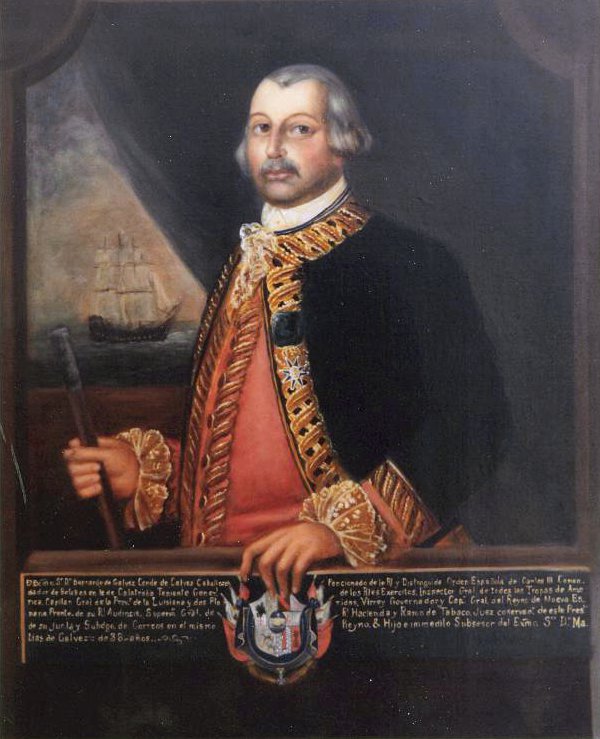
The portrait of Spanish General Bernardo de Gálvez hangs in the Hotel Galvez in Galveston, Texas. These names aren’t just coincidence, both the hotel and city were named in his honour.
It’s no wonder that his spirit is said to linger around this particular painting, in this particular hotel and town. As is often the the case, viewers are said to be overwhelmed by otherworldly emotions – particularly a sense of dread – when in the presence of the painting.
As is the case with many a haunted image or object (like good ol’ Robert, the Haunted Doll) viewers must be respectful towards the painting and ask permission before snapping a picture. Those who don’t are said to be left with a distorted image – often revealing the General’s skull or skeleton.
Have I been able to find any examples of these freaky photos? Of course not! But why let that get in the way of a good story?
The Paintings of Zdzisław Beksiński
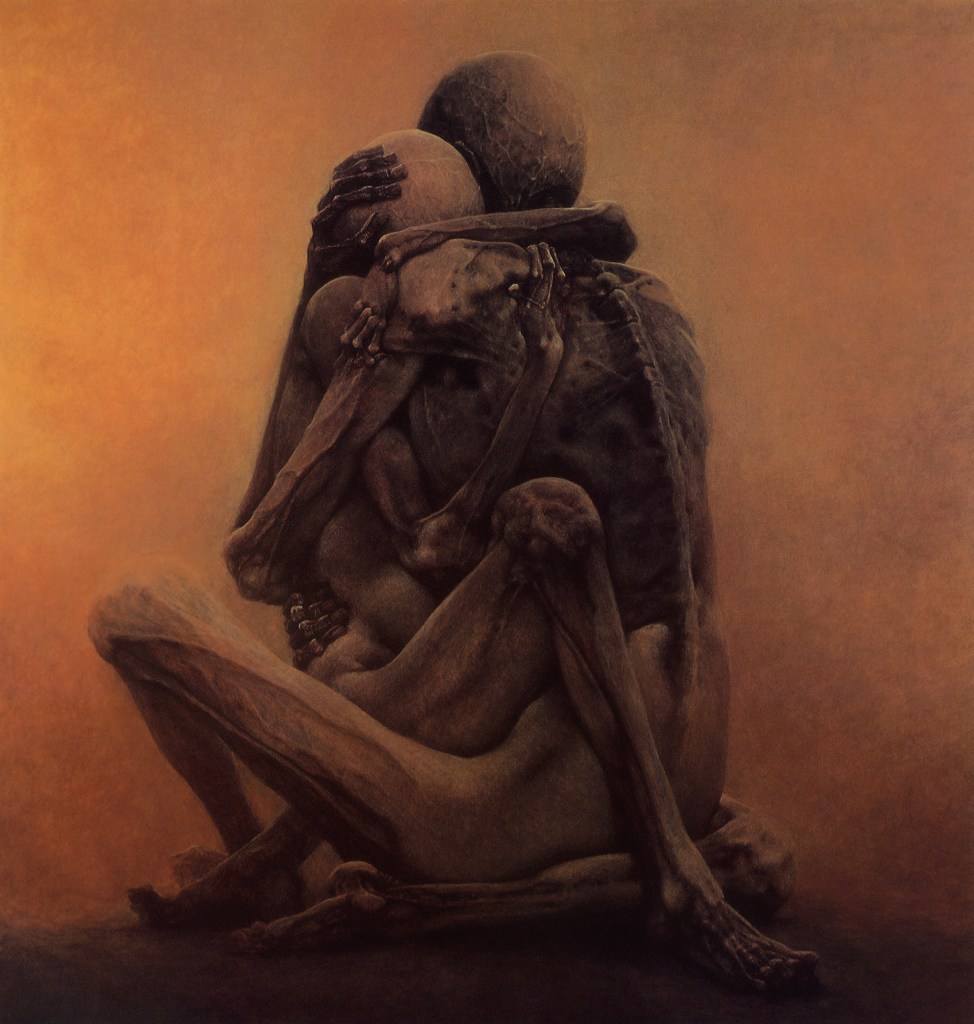
This might be cheating a little, but frankly, I don’t care.
I’ve been a fan of Beksiński’s work for a long time. His dark, surrealist paintings and dusky, post-apocalyptic landscapes and figures are unnerving, but often misunderstood.
Despite their unnerving appearances, Beksiński attributed no great meaning to his work – in fact, he found it to be optimistic and humorous. Still, he had a habit of leaving them untitled so as not to mislead the viewer into some kind of biased interpretation.
Although, in life, Beksiński was known for his kindness and modesty, his later life was full of tragedy.
In 1998, his wife, Zofia, passed away from cancer and a year later his son, Tomasz, a successful translator and journalist, died by suicide. Despite these tragedies, Beksiński continued creating art, exploring photography and photo manipulation.
Despite this, Beksiński’s so called “fantastic period” – featuring dreamlike decay and grotesque figures his art is best known for – took place in the mid 80s, a decade before his own personal tragedies. Still, owners and viewers of his work are said to have experience accidence, disturbances, feeling of dread after coming in contact with this work. Art having an emotional impact on the viewer – Who would’ve thought!
Still, there is another piece of contextualisation that impacts the way we view Beksiński’s work – his 2005 murder.
On the 21st of February, 2005, Beksiński was stabbed to death by Robert Kupiec, the son of his housekeeper, upon refusing to give him money. Kupiec and his cousin were charged and sentenced to 25 years and 5 years, respectively.
DidBeksiński’s tragic life and death retroactively curse his early artwork? Did his grim images somehow foreshadow his own passing? Who knows, but his work lives on – a wonderful example of how art interacts with our own interpretation of it.
The Portrait of Henrietta Nelson
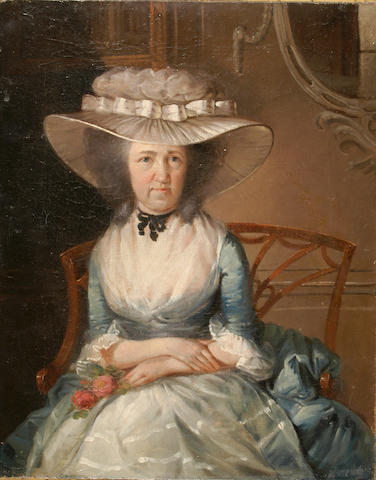
What is it with ghosts haunting their own portraits?
Well in the case of Henrietta Nelson, it didn’t all start with this painting. Henrietta Nelson lived in Yaxley Hall and loved it so much, she never wanted to leave. So strong was her love of the place, she had a mausoleum built one its grounds, so she could rest there for all eternity.
After passing away from a fall down the stairs in 1816, she was interred within her mausoleum and that should have been the end of the story.
Unfortunately, Yaxley Hall passed into the hands of new owners who found the mausoleum wasn’t to their tastes, and had it pulled down, with Henrietta’s body relocated to the nearby church.
Needless to say, she wasn’t impressed.
Since her body’s relocation, Henrietta’s ghost has been seen wandering the grounds of Yaxley Hall. Eventually, her spirit seemed to settle in her own portrait, which is said to change expression when viewed, but even this isn’t the end of the story.
The portrait was sold and ended up in the hands of Bryan Hall, of Banningham Rectory, and the spirit, now attached to the painting, moved there with it. Now, her spirit, as seen in the portrait, is said to wander her new home, desperately searching for a way home.
Don’t forget to subscribe and follow our social channels below!


 The Hawthorn Files