
P.T Barnum’s Fiji Mermaid
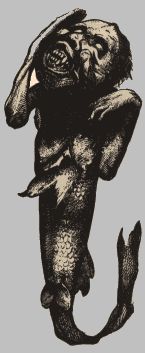
In 1822, an American sea captain named Samuel Barrett Edes encountered a specimen so bizarre that he was urged to purchase it from the sailors who showed it to him, for the princely sum on $6,000 – more that £160,000 in today’s money.
Some accounts claim the sellers were Japanese, while others claim it was bought in the Dutch East Indies but one thing was for certain – it was destined for showbiz.
The thing itself was described as “an ugly, dried up, black looking, diminutive specimen, about 3 feet long. Its mouth was open, its tail turned over, and its arms thrown up, giving it the appearance of having died in great agony.” It changed hands several times before landing in the greedy mitts of American showman, P.T Barnum, who exhibited it under the name “The Fiji Mermaid”.
Despite the hype, the Fiji Mermaid wasn’t one of a kind. Far from it. If fact, various specimens popped up all across Asia for a rather simple reason – they were commercially made by fisherman looking for a quick buck and a good laugh.
Some of the supposed mermaid were made from the top half of a monkey and the bottom half of a fish, but some were simple papier-mâché. Variations included two headed creatures, monsters with their face on it’s belly and dragon-like beings, but all had one thing in common – they were very much fake.
These days, the “mermaids” are on display in museums all over the world as curios and very few people still purport them to be real, but as Mr Barnum said, “there’s a sucker born every minute.”
The Fox Sisters
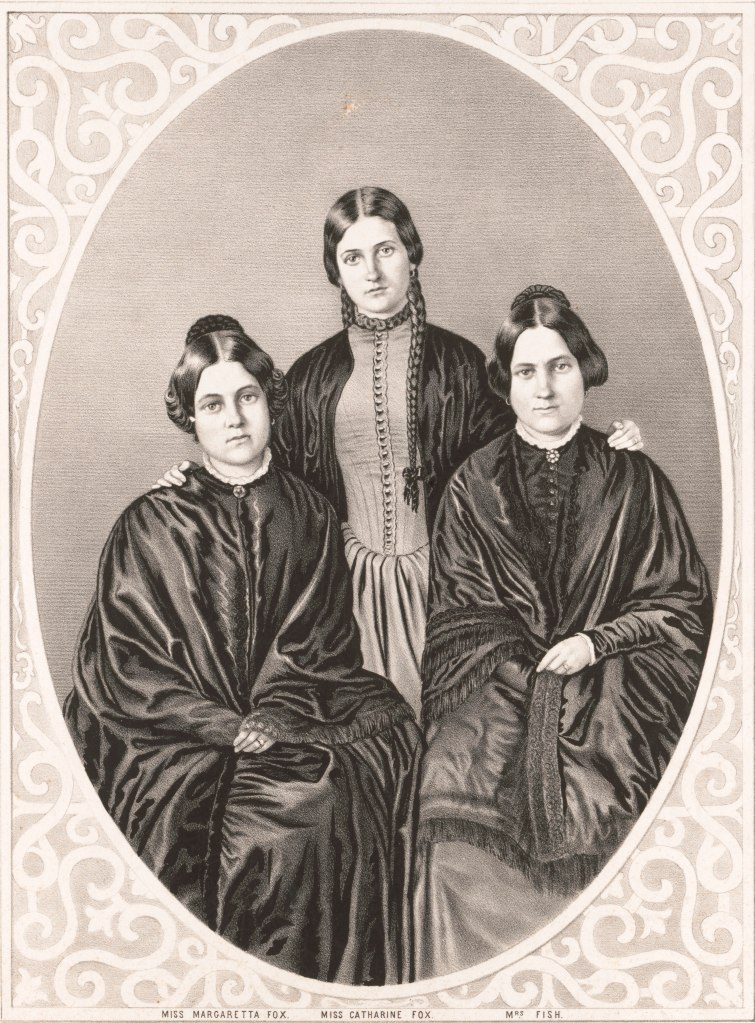
The spiritualist movement flooded America during the 19th century. It continues today, with dedicated churches and mediums of varying believability, but it was three Americans sisters who fostered the birth of the movement – Leah, Margaretta and Catherine Fox.
The sisters grew up in a reputedly haunted house in Hydesville, New York, where they were subjected to stranger noises and knocking. To shield their children from the events, their parents sent the two youngest girls away, and they eventually landed in the house of a radical Quaker couple who were good friends of the family. It was here that the girls’ talents were discovered.
Believing the phenomena surrounding the girls was genuine, the couple told their friends and brought them to witness the strange happenings and by November 1849, the Fox sisters were demonstrating their spiritualist talents in front of paying audiences, managed by their older sister, Leah.
Their séances consisted of rapping noises but soon became more elaborate, with flying tables and thrown objects, but their rising fame came with a price.
Two of the sisters began drinking, and soon they were fighting between themselves, culminating in Leah reporting Catherine to the Prevention of Cruelty for Children, leading to her being separated from her children.
This came to ahead in 1888, when Catherine and Margaretta came clean – they’d been faking their supposed talents, simulating rappings my cracking their toes and knees, demonstrating at the New York Academy of Music that these cracks could be heard throughout the hall.
Later, Margaretta recounted her confession and tried to return not the Spiritualist circuit, but never reached the highs of her previous career.
The Tedworth Drummer Ghost
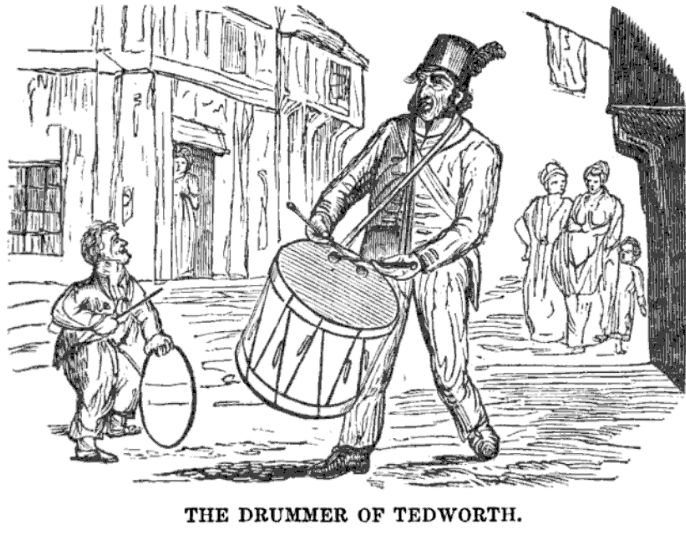
John Mompesson, a Wiltshire man, began to hear a slew of strange noises in his home. The scratching and panting noises could have been explained by animals or vermin, but the strangest sound was the drumming.
As this was the 1660s, Mompesson believed he’d been bewitched. He’d previously assisted in the convictions of a drummer names William Drury so – obviously – the man had used some sort of witchery to haunt him.
Despite the very real fear of witchcraft in this era, there where many who were skeptical of this incident, believing Mompesson was behind the phenomena to decrease the value of his rented house, or charge people to view the spectacle for themselves. Some even believe he confessed to the hoax.
Despite this, Mompesson’s son was quoted to say:
‘The resort of gentlemen to my father’s house was so great, he could not bear the expense. He therefore took no pains to confute the report, that he had found out the cheat: although he and I, and all the family knew the account which was published, to be punctually true.
Don’t forget to subscribe and follow our social channels below!


 The Hawthorn Files